Showing posts with label cooking. Show all posts

Thursday, March 1, 2018

International Cooking with Chemistry #2 - Bananas Foster

After reading Chemistry in Your Kitchen by Matthew Hartings this summer I decided to see if my International Baccalaureate students would be willing to have my learn how to cook a dish with their families.  Periodically my students will have a potluck during their core days where they miss their classes all day working on external assignments and there tends to be a wide variety of international cooking on display.  
In December of 2017 (ugly Christmas sweater day to be precise) I got to do a great dish to connect with chemistry; Bananas Foster (thank you Flanigans!).  Bananas Foster originated in Louisiana.  It is made by mixing butter and brown sugar on low heat before adding bananas and dark rum.  The rum is then ignited after briefly being heated.  Interestingly the alcohol in the rum does not completely burn.2  I had yet to ever cook using the flambe technique and this is a very approachable dish.  It also has a lot of experimentation to try.  The first thing I noticed when eating is that there is a substantial amount of dark rum flavor left after burning.  So I am in the process of now experimenting with what different alcohols taste like.  Thus far I have tried making Bananas Foster with gin and it tasted good.  Not only did I think so but my expert neighbor from the South confirmed.  I will later try it with vodka and maybe a clear rum as well.  I did not notice any difference with the flame although I would love to see if a distinction could be made using higher level equipment.    
Later in the year our IB Chemistry HL 2 class did the internal assessment where every students constructs their own personal chemistry experiment, does the experiment and writes a formal report to be submitted to IB as part of their grade.  One student did an experiment where they compared heating vodka with lighting vodka on fire to see how much alcohol remained for each.  The results showed that heating was more effective than igniting the alcohol although more results would have improved the certainty of that result.  
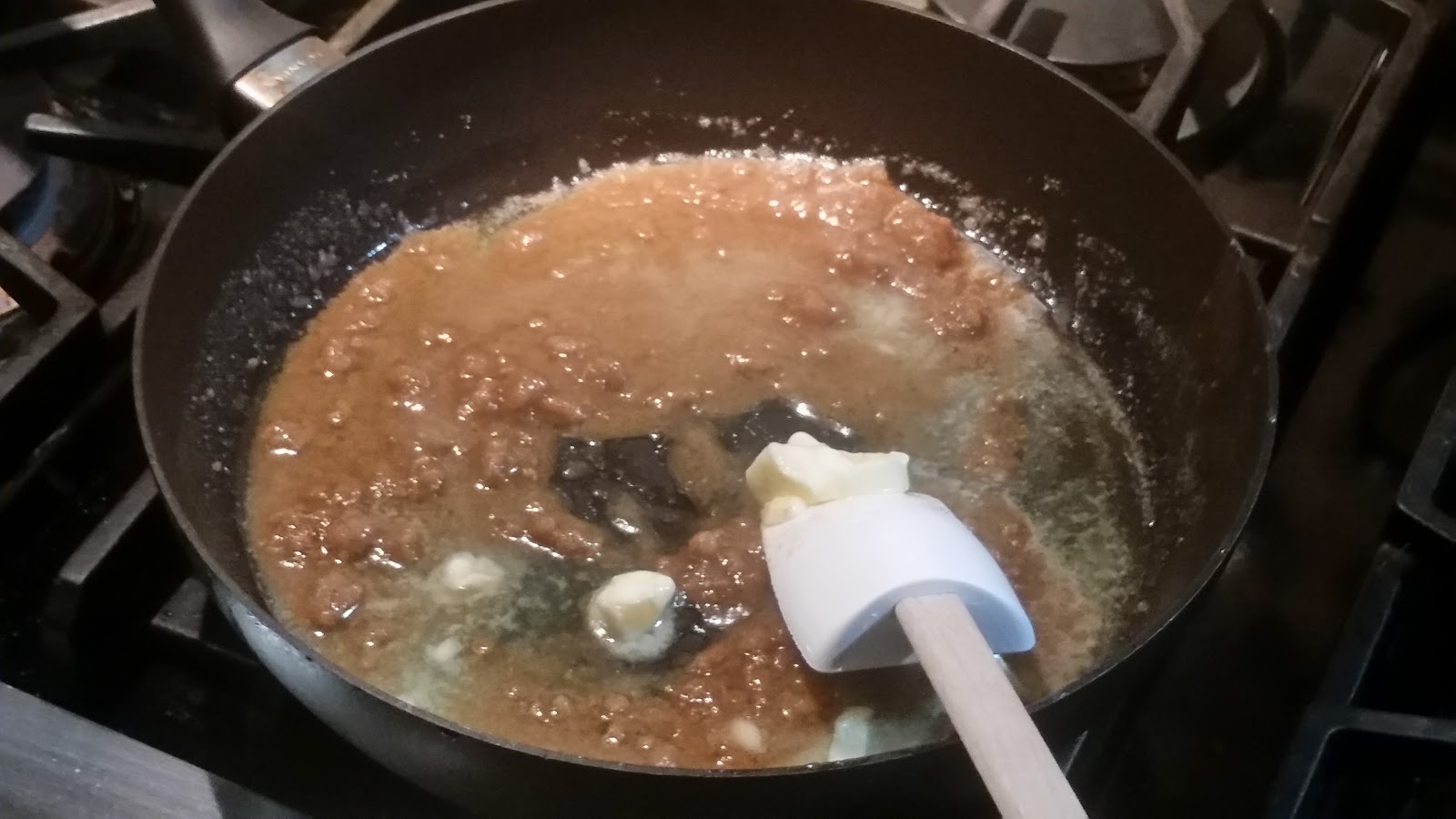
Figure 1:  Brown sugar and butter are mixed under low heat
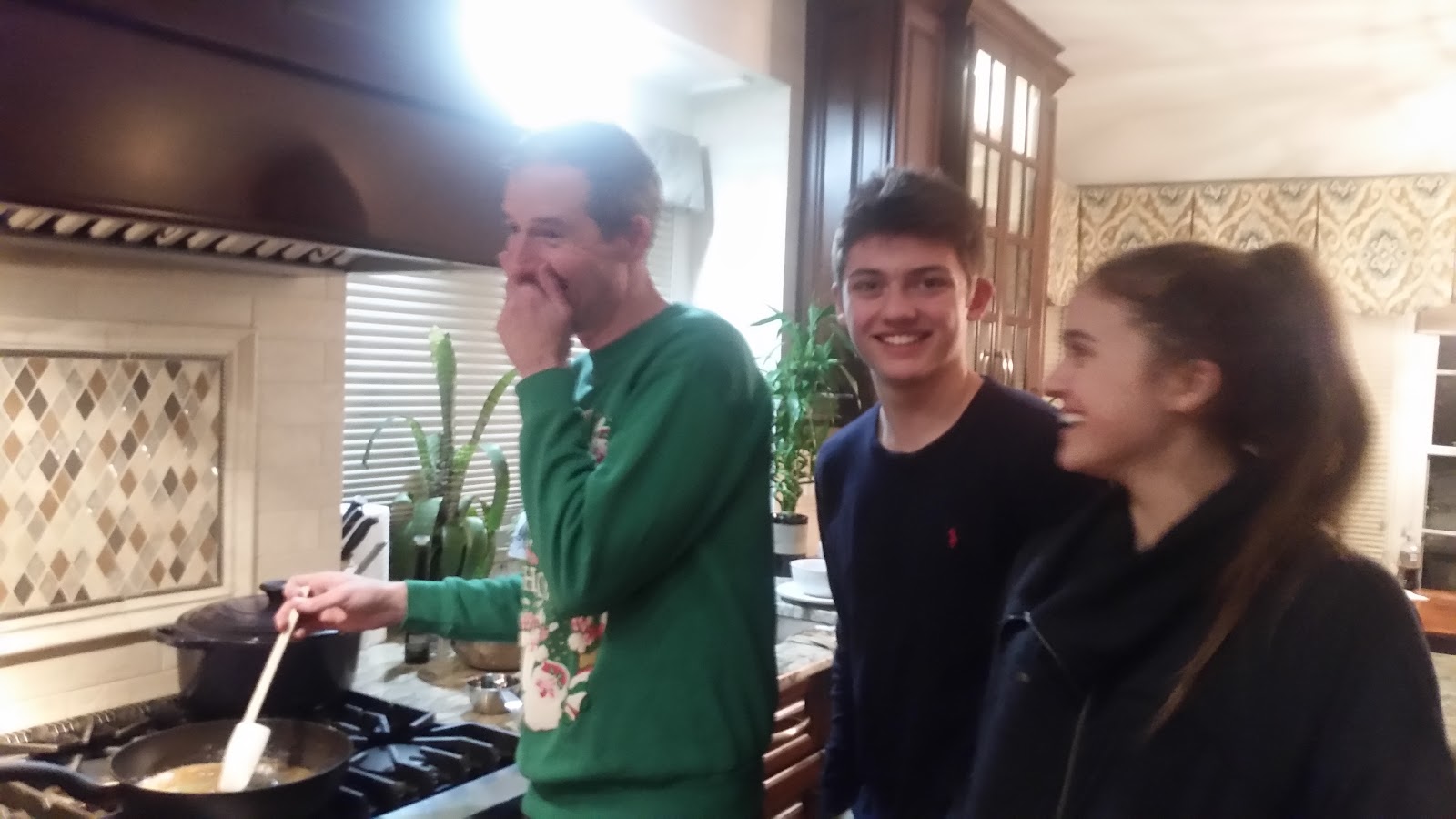

Figure 2:  Stir the butter and brown sugar thoroughly (ugly Christmas sweater optional)
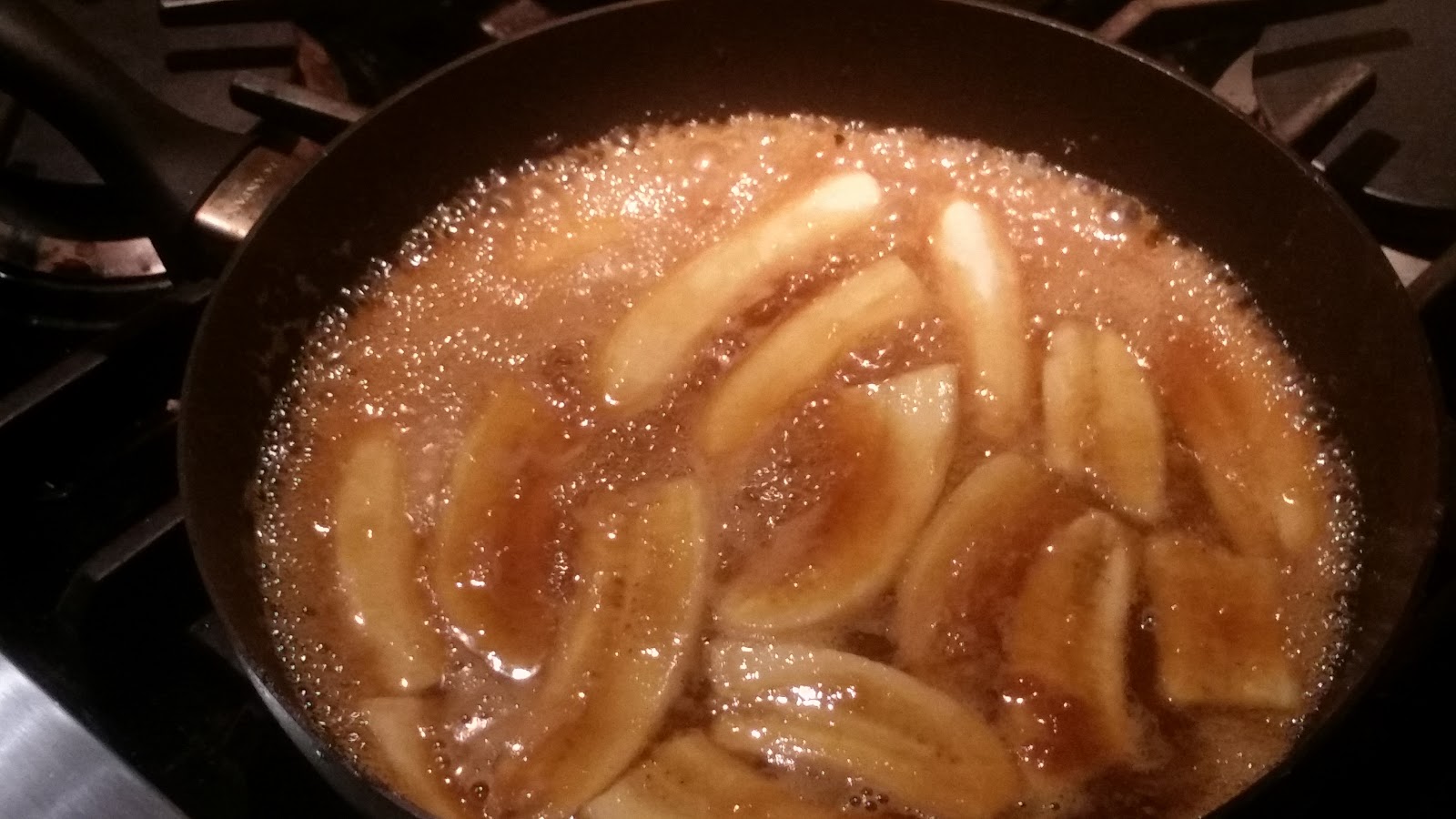

Figure 3:  Add in the bananas before adding the liquor and ignition.
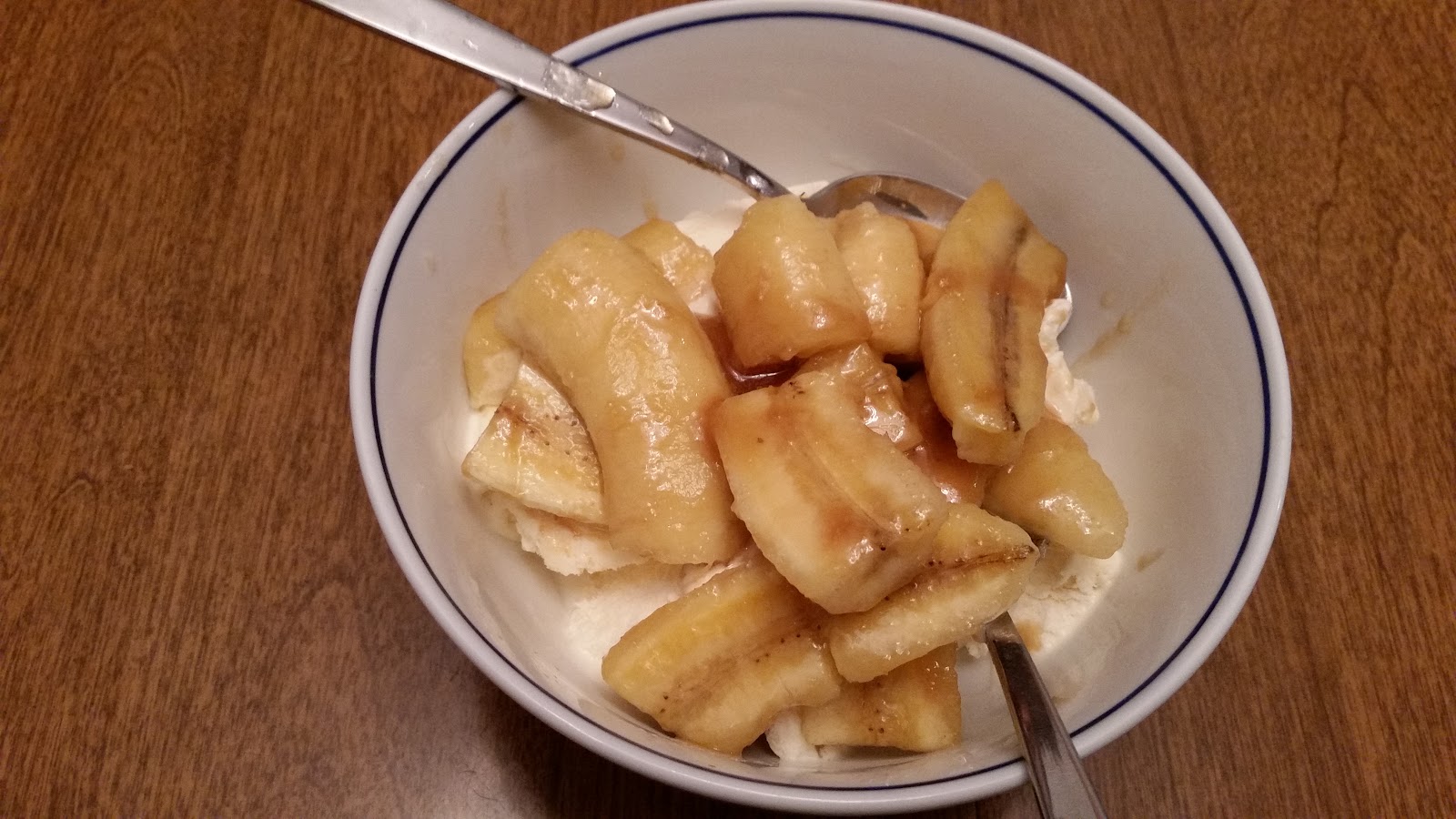

Figure 4:  The finished product that I made using gin in place the dark rum


#1 - Paneer

#2 - Bananas Foster
#3 - ???
Sources -
2. Hanson, Christine E.; Kwasniewski, Mishi T.; Sacks, Gavin L; Decoupling the effects of heating and flaming on chemical and sensory changes during flambe cooking International Journal of Gastronomy and Food Science V. 1 (2) June 2012 p.90-95 https://www.sciencedirect.com/science/article/pii/S1878450X13000024

Sunday, December 3, 2017

International Chemistry In Your Kitchen #1 - Paneer

After reading Chemistry in Your Kitchen by Matthew Hartings this summer I decided to see if my International Baccalaureate students would be willing to have my learn how to cook a dish with their families.  Periodically my students will have a potluck during their core days where they miss their classes all day working on external assignments and there tends to be a wide variety of international cooking on display.  
In October I met with my first family (thank you Sharmas!) to learn how to cook Paneer.  I have grown up as a very picky eater and when you are a child that is a picky eater it becomes the mission of a select few to get you to try their casserole.  So I was very excited about paneer since it seemed like the perfect dish that was both new but not overwhelming to me.  
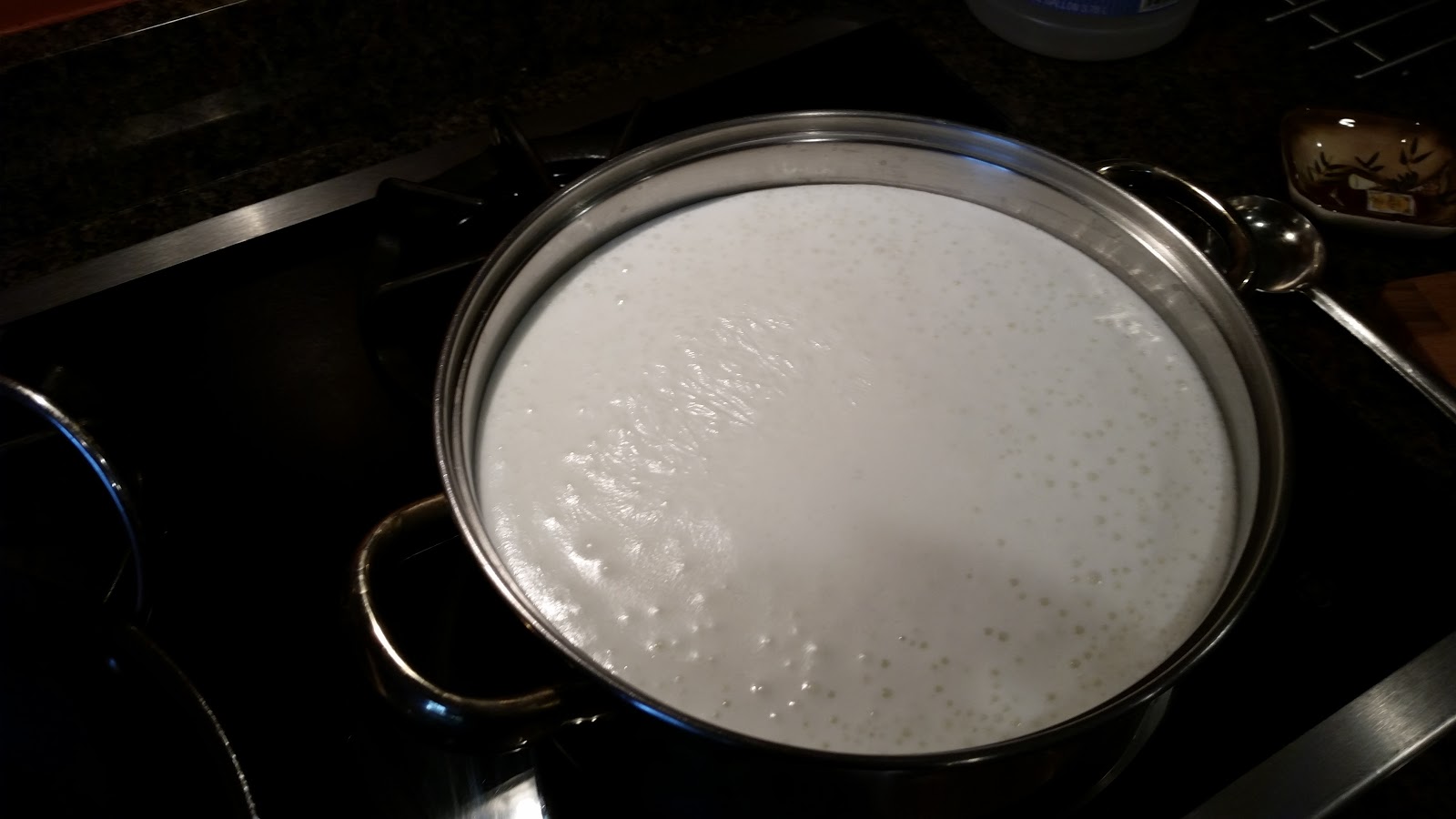
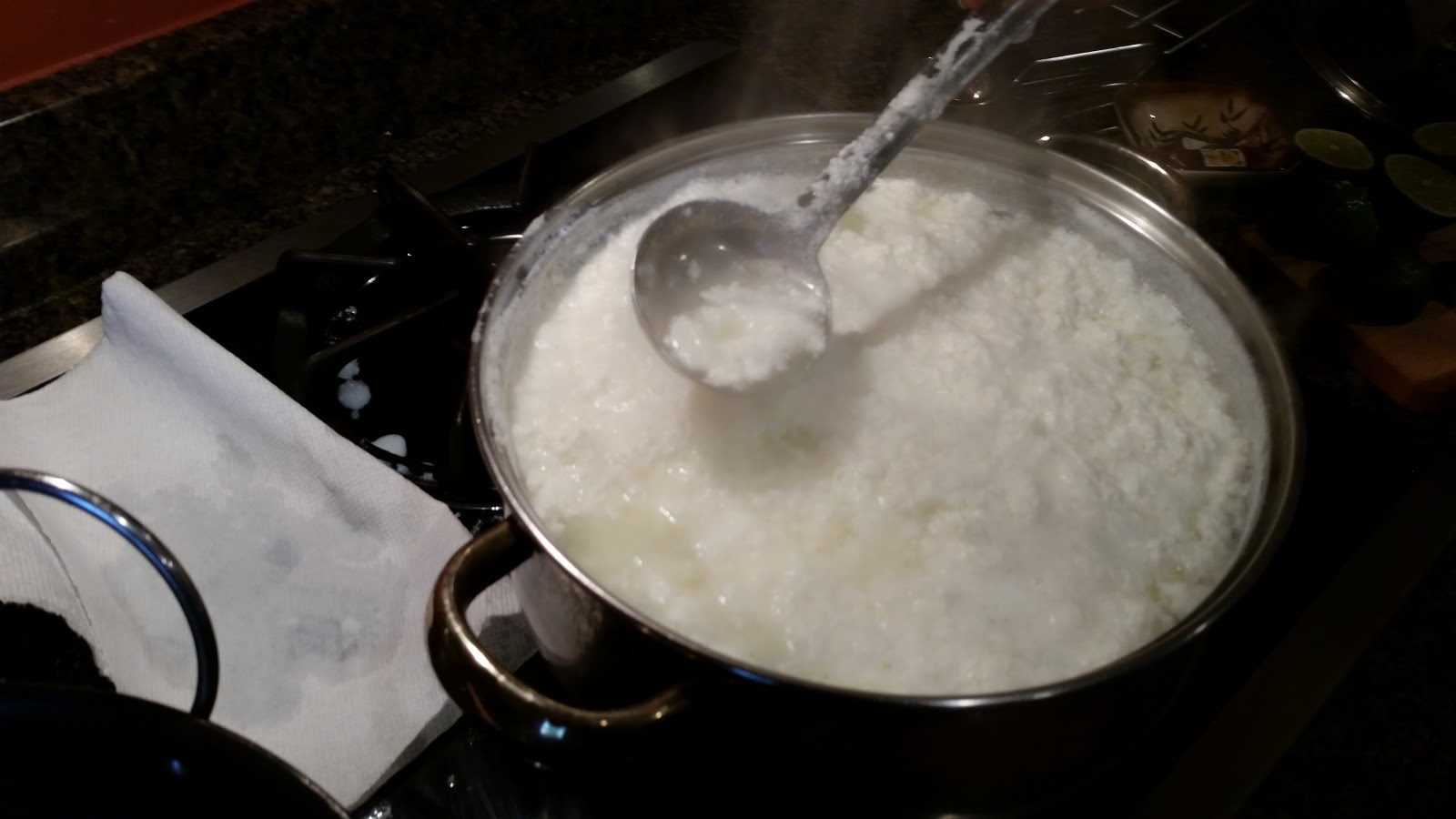
We boiled a very large quantity of milk and added some lime and vinegar to curdle the milk when it was just reaching boiling temperature.  
Figure 1:  Milk just before boiling

Figure 2:  The milk curdling after the addition of lime juice and vinegar

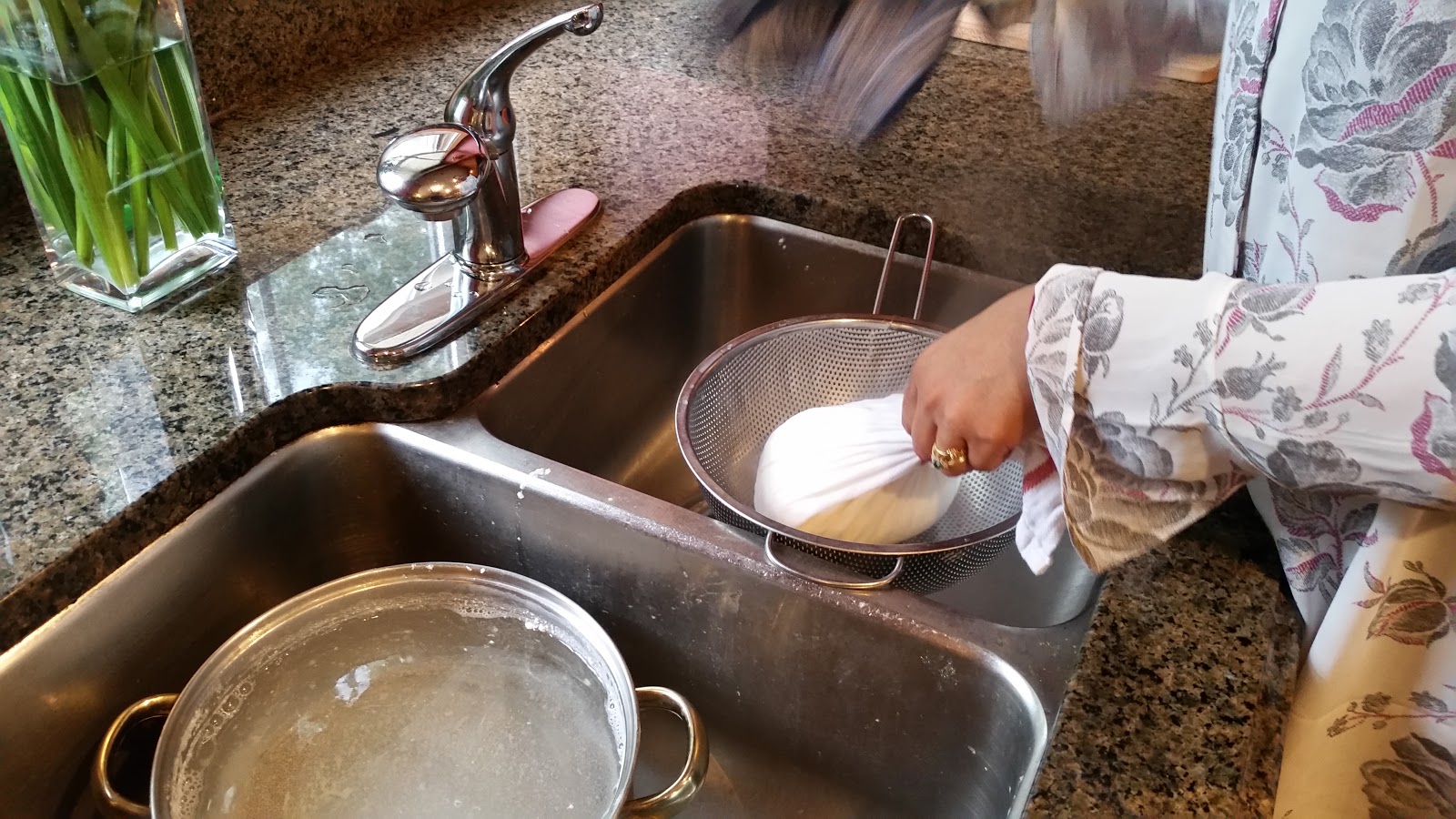
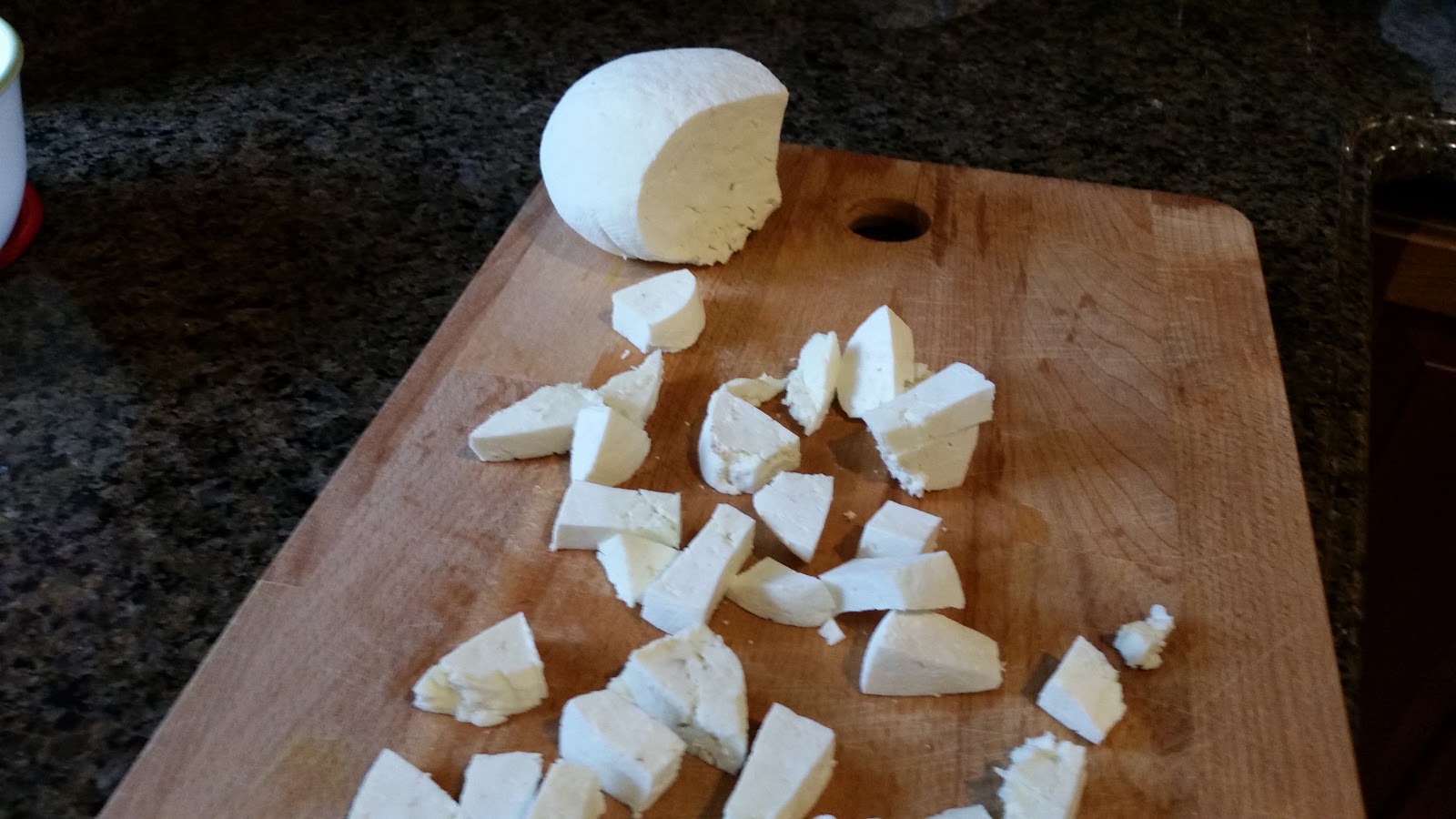
The acid bonds to phosphate groups on the casein proteins.  The casein has a hydrophilic and hydrophobic end.  The hydrophobic ends attract the same portion of other casein proteins and the hydrophilic ends attract to water because of the negative charge of the phosphate groups.  The acid reduces the attraction to water and causes the casein to clump as seen in Figure 2.  The mixture is then put into a towel allowing the excess liquid to drain.  The protein along with some trapped fats then link forming a block of paneer.  
Figure 3:  The paneer mixture is now forming while the excess liquid drains

Figure 4:  The paneer takes shape and can be cut into pieces

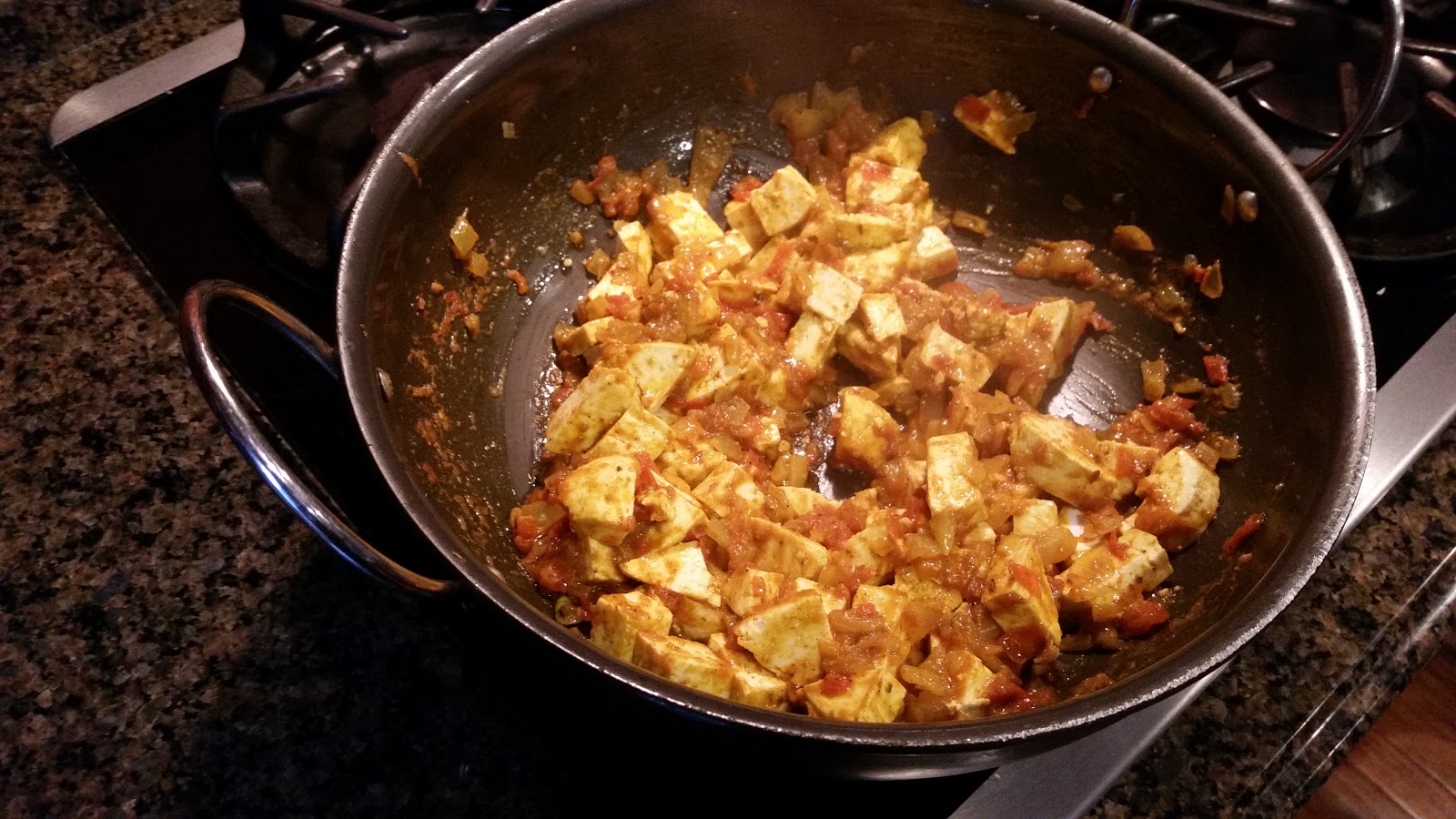
At this point we made a curry sauce using a variety of spices, tomatoes and onions.  The paneer was added to the curry sauce.  

Figure 5:  Paneer cooked in curry sauce

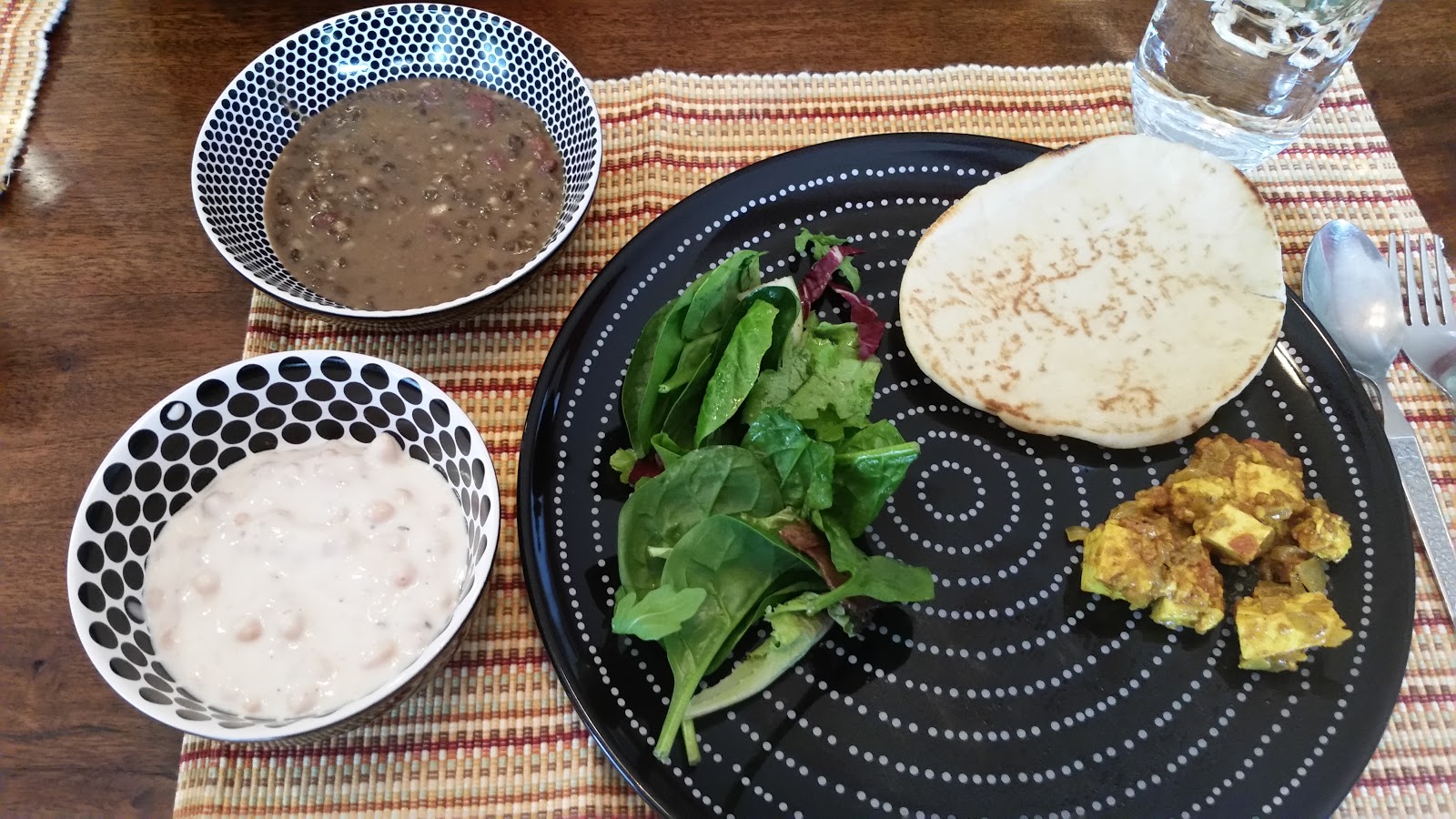
Figure 6:  The complete meal with paneer, lentil soup, yogurt, salad and naan.  

I had disorganized intentions behind doing this.  I had personal desires to learn how to cook more foods, and connect better with students and families in our IB program.  I had professional desires to connect chemistry and cooking and also chemistry with international mindedness.  The experience surpassed my expectations.  I learned about my students, got to eat an authentic Indian meal and it was completely vegetarian.  I learned you can purchase paneer at Costco and I also learned where to buy spices and groceries for preparing Indian food.  The concepts in this dish applied perfectly to the unit we learned next in class about acids and bases and we cooked paneer in class to reinforce the concept of acids as well as allow more students to experience an international dish.  We used citric acid rather than vinegar and it worked fine with no negative impact on the taste of the paneer.  Future possible experiments could focus on how the pressure applied to the cheese as it forms influences the final product or how concentration of acid affects the final product.  I believe the proteins clumping causes various components of the mixture including fats to get trapped and both of these experiments should influence what and how much gets trapped.  It would also be interesting to move a step further and add rennet and start developing cheeses.  


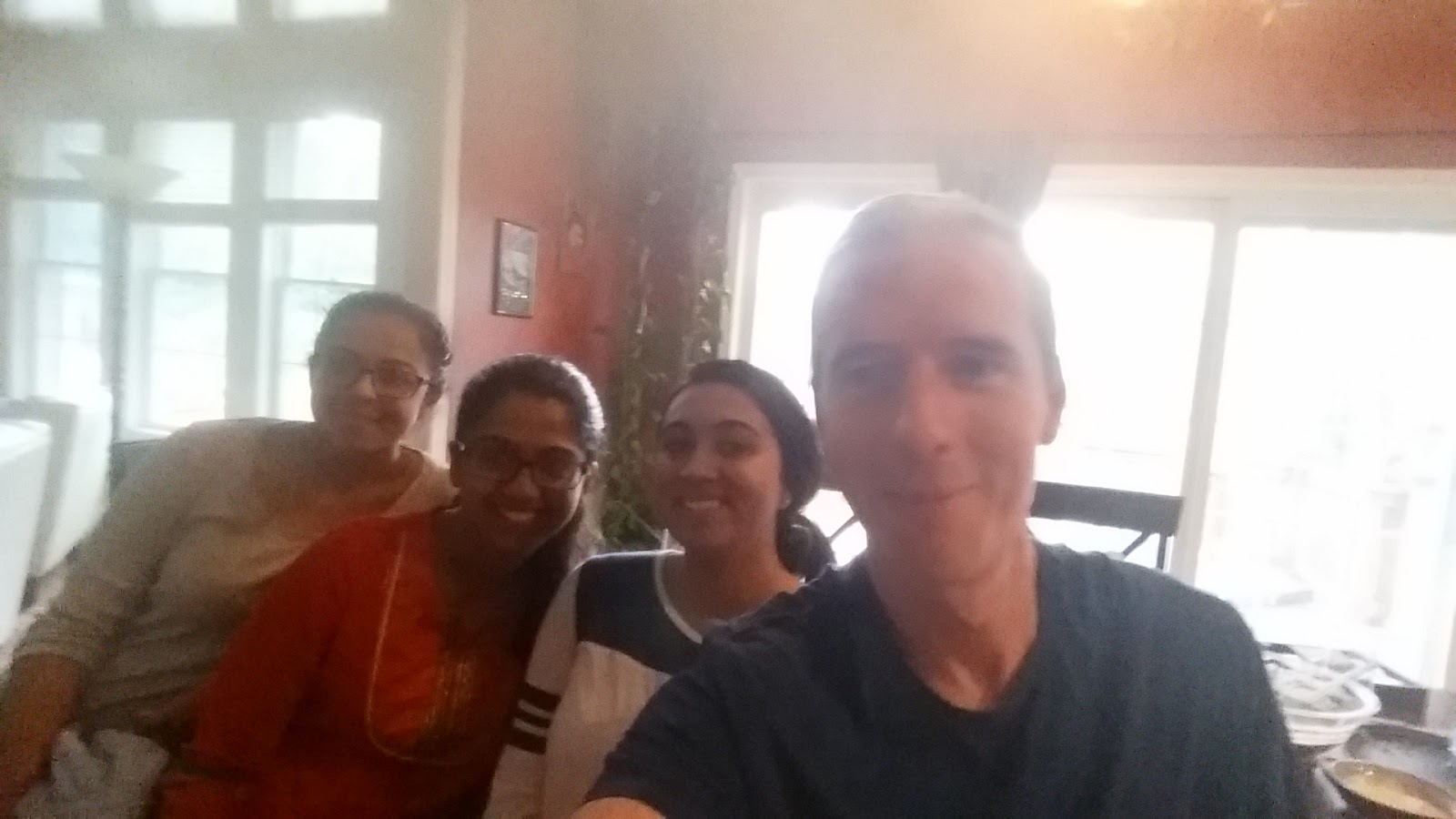
Figure 7:  My students Manasi and Ritika along with Manasi's sister Tanvi after our meal

Sunday, September 10, 2017

Book Recommendations for Chemistry Instructors

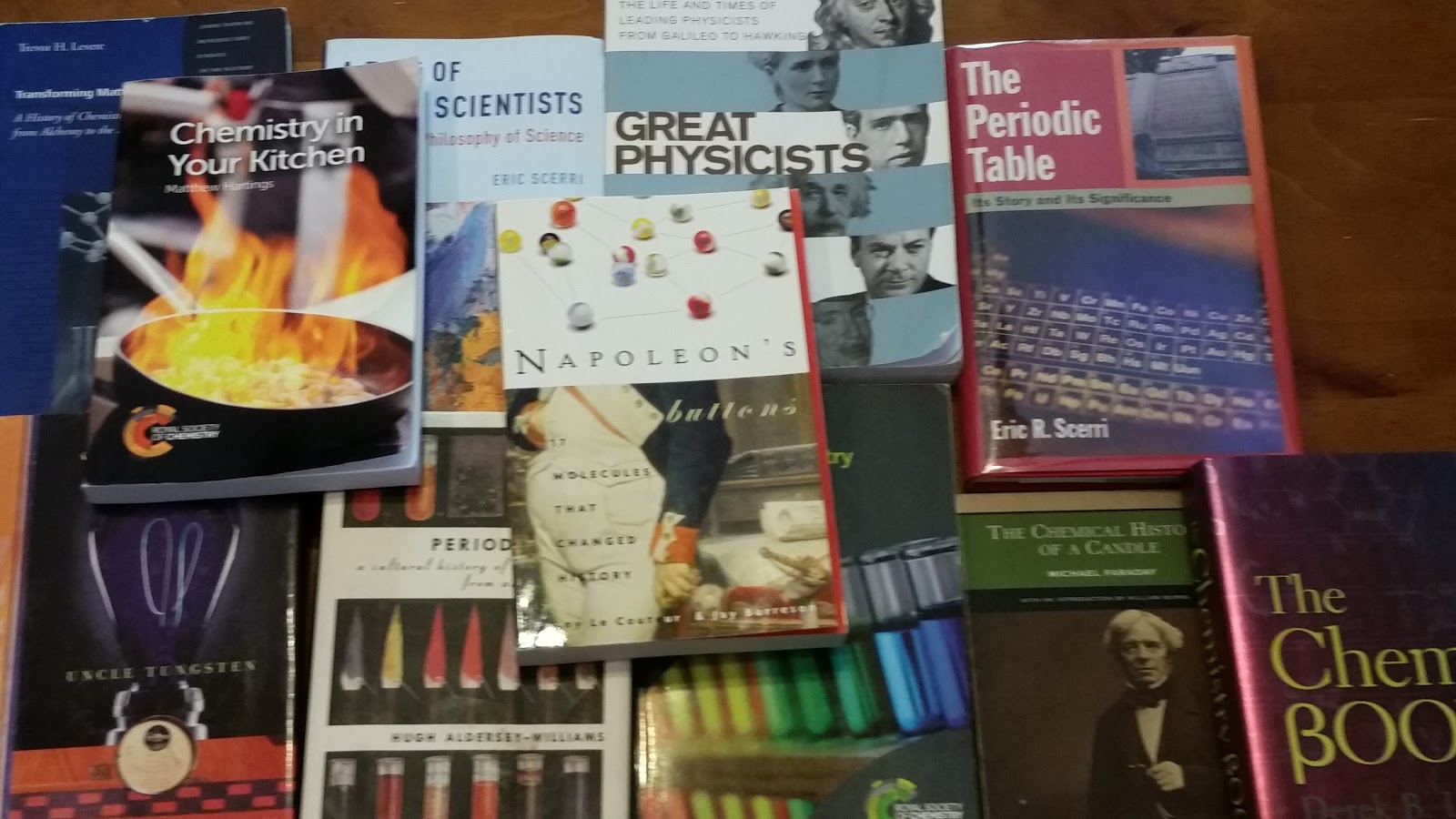
20170903_131356.jpg
It can be easy as a teacher to slip into a routine where your focus is solely on student learning.  But as teachers it is important that we value education and learning and a great way to do this is by reading about our fields.  Here is a variety of chemistry and chemistry-related books that I have enjoyed many of which I now use annually in my teaching.  

The best book for chemistry teachers to read is a textbook about physics.  There is yet to be a chemistry version of this, but the author (Arons) spent considerable effort to interview students at various levels about their physics understandings.  One of the key ideas from this book is that students can produce correct answers without understanding what they are saying and this book explores what questions to ask to get to the point where understanding can actually be assessed.  For a chemistry teacher there are topics that might not directly impact their teaching, but energy, force, measurement and many other topics will influence your understanding of the topics and allow you to question at a particle level what is happening in chemistry in a way that you were not able to before reading the book.  The approach to assessment is valuable in all science courses and this book frequently impacts my teaching of chemistry.  This book is quite expensive, so try and find it through a colleague or library first.  It is worth tracking down.

#2 The Periodic Table - Eric Scerri
Eric Scerri has a lot of wonderful books and is able to get into a lot of material that chemistry teachers will often hand wave over.  Here is a blog post about 3d and 4s orbital ordering.  In this book he discusses the first periodic tables developed and what traits each scientist included and omitted.  He talks at length about Dmitri Mendeleev and compares what he did with what others had done before him as well as what others did better than him.  This book also includes some chemistry content about the periodic table that is masterfully presented.  The book’s subtitle “Its Story and its Significance” is also appropriate as the book builds an appreciation for the wealth of experiment that resulted in the modern periodic table.  Chemistry teachers often celebrate the mole, but the periodic table is a much more important accomplishment.  

#3 The Poisoner’s Handbook - Deborah Blum
The title of this book caught my eye and the book far exceeded my expectations.  Deborah Blum works through a series of different poisons all through the lens of the founding of respectable forensic science during the prohibition era in New York City.  This book discusses poisons, antidotes, detection, history and politics along with some captivating stories.  This is a much lighter read than the first two books but also might contribute many interesting anecdotes to your teaching.  

#4 Napoleon’s Buttons - Penny Lecouter and Jay Burreson
Napoleon’s Buttons suggests 17 chemicals that could be considered to be the most influential in world history.  The book goes through some chemistry and some history and it absolutely loaded with interesting information about both.  The connections between the two are also really well developed and this was an enjoyable and educational read.  

#5 Great Physicists - William H. Cropper
This is a book that is a series of biographies about famous physicists.  The best part of this book to me is that it gives a fantastic rundown of the development of thermodynamics that includes the key experiments and the confusion that resulted from them.  The book balances the personal stories of the scientists with their key experiments and also some basic theory about the physics they did.  Your lectures about entropy and Gibbs free energy will be better after reading this book.  

#6 Chemistry in your Kitchen - Matthew Hartings
A chemist that loves to experiment with cooking and is well versed in the chemistry we know and do not know about with regards to cooking.  This book was very interesting, a lighter read and also might inspire you to cook something.  The book is very well written in that it will connect chemistry and other science concepts with cooking, give some potential recipe alterations but it allows you to put together your own alterations rather than just providing too much direction.  I very much enjoyed this book and I will be seeking out more reading about the topic.  This book has 15 chapters that each detail a specific food or drink, some personal connections and some science behind the cooking variations possible.  

Andy Brunning makes infographics for chemicals that you typically are not aware of but have experienced nonetheless.  He is great to follow on twitter and this book is a collection of his most interesting chemistry graphics organized by themes such as poisons, colour and lots of food information.  If you are a chemistry teacher I highly recommend you purchase a poster for your room from his collection.  

#8 Uncle Tungsten - Oliver Sacks
This is the story of Oliver Sacks as a  young child who has a surprisingly large access to chemicals.  Oliver describes his curiosity as a child, how his family and friends supported this curiosity and a variety of experiments and experiences that shaped his knowledge of chemistry.  There were a few experiments that were new to me that I ended up trying from this book and the perspective is a good one to experience as a chemistry teacher.  

#9 A Tale of 7 Elements - Eric Scerri
Prior to Moseley’s experiments determining atomic charge, there were many quibbles over element discovery.  After his development of the answer key for the periodic table so to speak there were 7 elements missing between hydrogen and uranium.  This book describes the search and discovery of these 7 elements.  The philosophy of how credit should be awarded is discussed with some interesting plots such as an element that was discovered and then later a more stable isotope was found.  And Tc was discovered frequently before it was actually discovered.  Eric Scerri was the one author to appear on this list twice and he has written several other great books that I have enjoyed reading besides these two.  

#10 Transforming Matter - Trevor H. Levere
Starting with alchemy this book moves through the history of chemistry particularly focusing on the early scientists and their struggles to make conclusions from experiments when there was not a lot of knowledge to build on.  A lot of good information about Antoine Lavoisier, Jacob Berzelius and a wide variety of scientists that were familiar and many that I was not aware of.  This book had a lot of interesting stories about the politics and drama behind the scenes of the famous experiments with plenty of chemistry mixed in.  

#11 Elements - Theodore Gray
This book is now a series of books (Molecules, Reactions, The Element Vault) that pair good photographs along with chemicals.  I have used these books to start class off by reading to my students about a particular element or compound and there are many interesting facts presented about them along with a quality picture to go with that information.  The Element Vault also comes with a thin sheet of gold foil (and a couple other fun things) if you happen to teach Rutherford’s gold foil experiment.

#12 Plutonium - Jeremy Bernstein
This book caught my eye at a bookstore and I enjoyed it very much.  The book discussed the discovery of plutonium in the context of world war II.  It combines the historical perspective with the challenge of being able to separate elements with such similar electronic structures from each other when elements only differ based on electrons two energy levels beneath the valence shell.  

#13 Chemical History of the Candle - Michael Faraday
There is a horrible tendency in chemical education to avoid understanding what a flame is.  A flame combines chemical reactions with light and to really comprehend at the particle level what happens in a flame is often diminished by vocabulary in place of visualization.  This book is unique in that it discusses a brief history of the lectures at the Royal Society and then works through the demonstrations done by Michael Faraday to show how a candle works.  The chemical demonstrations are brilliant given the time they were executed and could be replicated in the classroom with a bit of glassware preparation.  The lecture is really a great example of phenomena based teaching or utilizing evidence in the classroom.  


Currently reading
The Chemistry Book - Derek B Lowe - This book is a similar to the Elements series by Theodore Gray but from a historical lens.  It moves through major milestones in chemistry by assigning each a date as best as possible.  On one page is a picture of the chemicals or scientists or apparatus and on the other are a couple of paragraphs describing the event and its significance.  

I lucked into this book while in a used book store.  It was written in the 1950s and is a really interesting perspective as it discusses the challenges that accompanied scientific discoveries (before cars, before paid lab positions, before science supplies could be purchased).  I have not yet reached the gold foil experiment, but Rutherford really accomplished a lot prior to that experiment that might often be overshadowed by one of the most important experiments in science.  

In queue
The Secrets of Alchemy - Lawrence M. Principe