Sunday, May 27, 2018

It's time for a better evaluation system

Considerable time and effort are spent evaluating teachers without much to show for it.  Rarely does a teacher excel in teaching and credit their evaluation system for helping them to get where they are.  Evaluation systems rely on overworked administrators that nearly always end up accomplishing compliance rather than effective feedback, evaluation and improvement.  This causes the administrator to rely on a rubric that often is inappropriate. For example, our district uses the same rubric to evaluate my chemistry class as well as physical education, elementary, special education, etc.  The systems on these rubrics are most inappropriate because they evaluate the teacher and classroom environment relative to an expectation. The end goal is the initial evaluation.

I teach science using the modeling pedagogy.  The big philosophical difference between modeling and traditional teaching is that in traditional teaching the student is explained what the final objective or standard is and then this is repeated with variety as the student approaches that standard.  Modeling, in contrast, starts with where the student is. What is the current understanding of this concept and how can this student construct models from their understanding that are revised when the models fail or require change to explain discrepancies.  A big flaw in traditional learning is that by focusing on the final product in lieu of the status quo for the student we build concepts with lots of holes and misconceptions. In a constructivist approach students are more likely to identify and deconstruct these misconceptions.  

How can we shift teaching evaluations from a traditional model to a constructivist approach?  We need much more contact time with teachers. Administrators do not have the capability to accomplish this.  I have had some of the most talented administrators that I could have ever expected and yet I rarely see anything of value from my evaluations.  Instead we should create positions dedicated to evaluation and observation only. If a position was only spent meeting with teachers on prep periods, setting goals with teachers, observing teachers, giving feedback to teachers and connecting teachers the evaluation system improves dramatically.  This changes the evaluations from punitive to feedback and change focus from busy work and compliance to improvement and growth.

Teaching is very isolating.  Teachers are alone in their classrooms for the majority of their career.  Even when teachers meet with other teachers and do professional development it is very easy to continue doing the same things.  But having a quality teacher working with you is a tremendous advantage. An employee that does observations full time will get to experience the strengths of a school and will be able to connect teachers based on strengths, weaknesses and goals.  If a teacher wants to work on assessment, the evaluator will know who does assessment well and can facilitate connecting them. The larger amount of contact time also allows the evaluator to observe the teachers more frequently, more informally and also work on planning.  You would get better consistency by having fewer people doing evaluations and since they would spend more time with each teacher.

This would also open up some time for overworked administrators to spend less time fulfilling compliance requirements and instead have positive impacts on their staff and students.  Currently most administrators can spend their entire day answering emails, attending meetings and dealing with disciplinary infractions. By opening up their time they would be able to work on mentoring programs, developing professional development, being more visible in the school and whatever creative programs they desire to implement.  

Saturday, May 5, 2018

I Don't Hate Grading Anymore


I hate grading.  Grading takes so long and marking wrong answers for hours on end after spending so much effort on teaching is an emotional drag.  Grading isn’t just obnoxious because it is redundant, length and often mindless. For high school teachers it can often be used as a tool to shame students, to make them feel bad about themselves and that blame is tough to share and unhealthy to deflect to students and their parents.  

I was listening to a podcast about how we do not remember our memories correctly.  We replace our memories with what we currently believe as often as possible because of how brain storage works.  If you currently are aligned heavily with a set of political ideologies, you are likely to shift your memories towards those same ideologies.  But I couldn’t help listening to this podcast to think about how grading affects teachers negatively. When teachers grade they see the correct answer 170 times.  They even see the wrong answers so frequently that they will often tell the next group in advance of what mistakes they will make. So when a student repeats a mistake it can produce an unhealthy response.  We think of students as lazy or that they don’t care. This happens especially when teachers are put under external pressure from administrators, parents and even the students themselves. And as we continue this year after year we eventually reach a point where it is beyond the teacher to remember what it was ever like to learn the material for the first time.  We shift our memories to think of our subject matter is being so clear and simple that we disconnect from reality.

About six years ago I was going through my files and I found a set of exams from when I was in college studying chemistry.  I looked them over and a multiple-choice question from my advanced thermochemistry class caught my eye. I read a question and saw that I had gotten it wrong.  It was about entropy, enthalpy and spontaneity and I got really upset at myself for getting it incorrect. In fact, I remember thinking how furious I would have been had one of my students, even a struggling student, if they had made the same mistake I had made in my third year of college.  I had taken high school chemistry, AP chemistry and was over 30 credits of chemistry in to my degree when I made that mistake.

I think that moment has prevented a lot of negativity towards my own students as I now can remember with a little bit of evidence that sometimes students know something but struggle with the mechanics of the question, sometimes new information makes us uncertain and sometimes it just takes time to understand a concept.  When students get questions wrong I no longer take it personally. I will never get angry at a student for being wrong or needing more time to understanding something. If a student or parent tries to push an unhealthy pressure on me I feel comfortable deflecting that pressure away and not engaging with them. And I believe I just found the perfect grading system to make this all work.  

I have now been using standards based grading assessments for the past three years in my chemistry classes.  This has been a minor change as it is really just chopping up the test into sections that focus on 6-10 concepts from a unit (examples are on my chem website).  I liked the organization and felt that it improved feedback to students and parents.  But in the past two weeks I have started to add one last feature and I think the slight increase in grading is about to be overwhelmed by the reduction in mental health stress in grading.  Students will now be able to reassess on standards.

The logistics I am currently planning on using involve having students complete a form for any standard that they wish to reassess that focuses on directing students back to what we learned in class.  They can then improve their understanding of the topic and reassess. Reassessments will happen once per week on a rotating after school and lunch schedule that so far has been very reasonable to execute.  The following year I will join with the teacher next door to me so that each of us is only responsible for every other week to supervise students reassessing.

Grading still is not fun, but the last two tests that I have graded I have felt so much more at ease with student mistakes.  It is no longer an omission that will compound as the year progresses, but instead feedback that the student can rectify and incentive for them to reflect on their understanding as well as what they accomplish during class time.  It is no longer an indictment of my teaching but instead feedback to me on what went well and what did not. It is no longer a cycle of two week periods where students rush through material, but instead this allows us to slow down when needed without losing content.  


Thursday, March 1, 2018

International Cooking with Chemistry #2 - Bananas Foster

After reading Chemistry in Your Kitchen by Matthew Hartings this summer I decided to see if my International Baccalaureate students would be willing to have my learn how to cook a dish with their families.  Periodically my students will have a potluck during their core days where they miss their classes all day working on external assignments and there tends to be a wide variety of international cooking on display.  
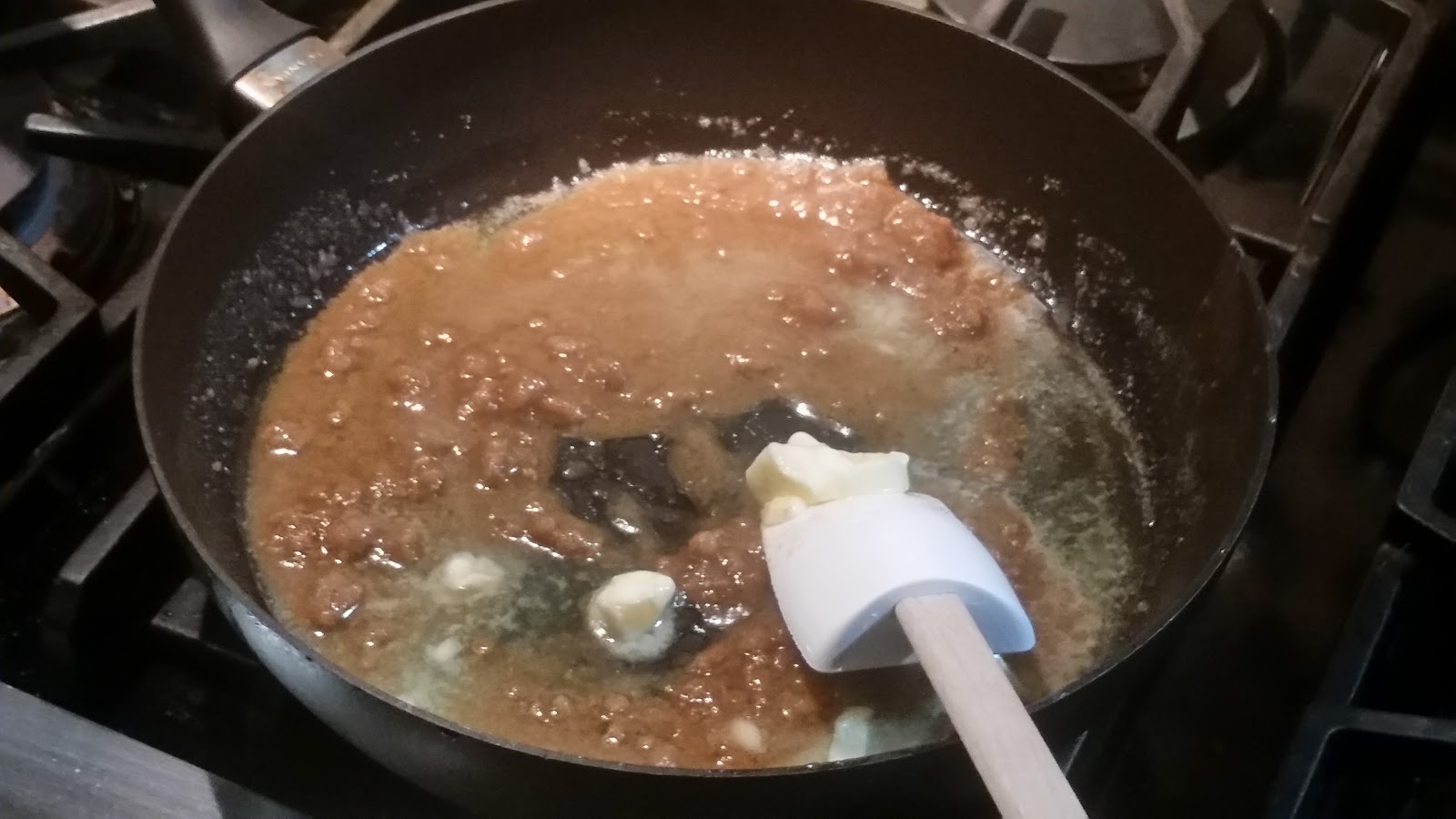
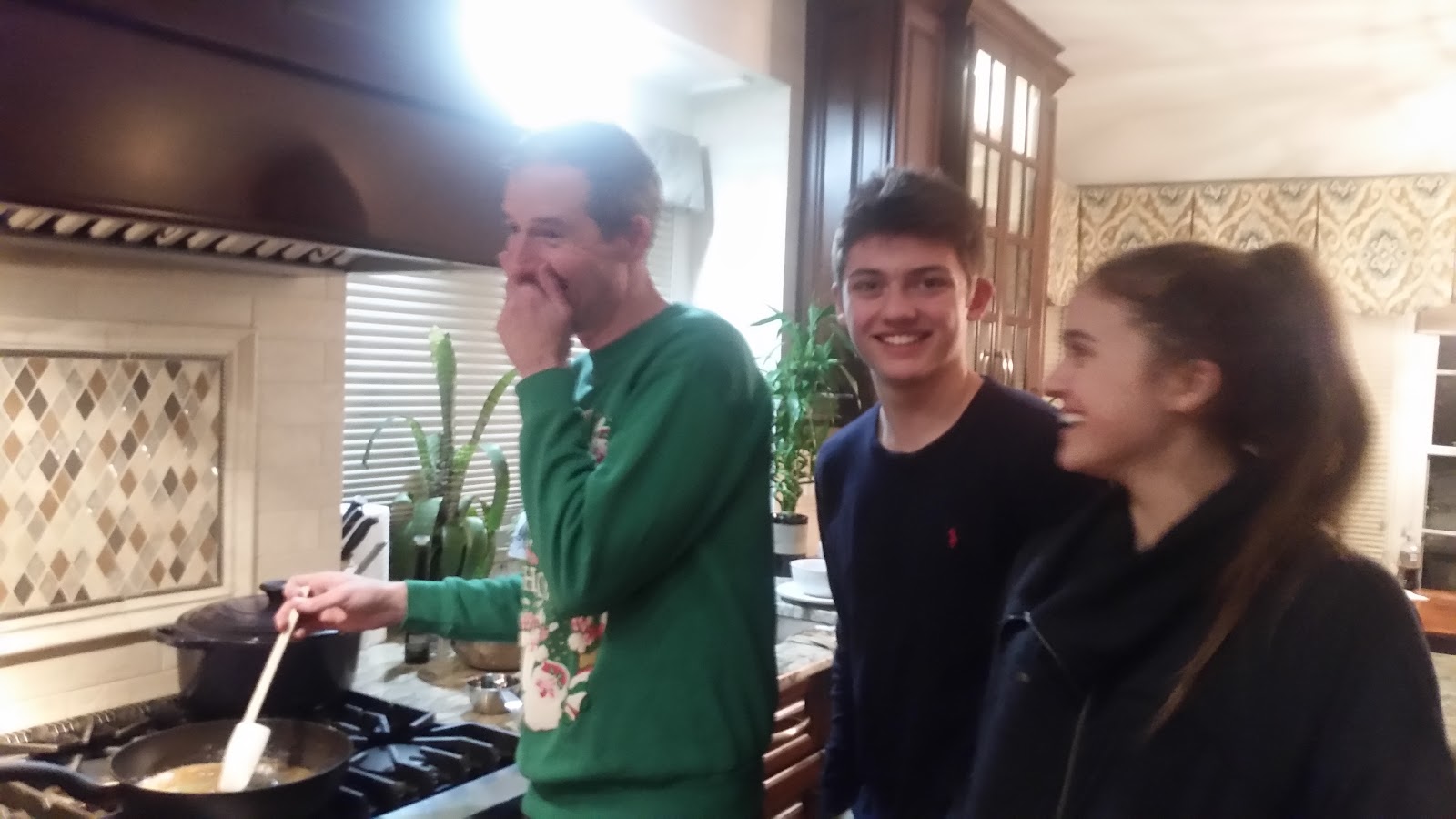
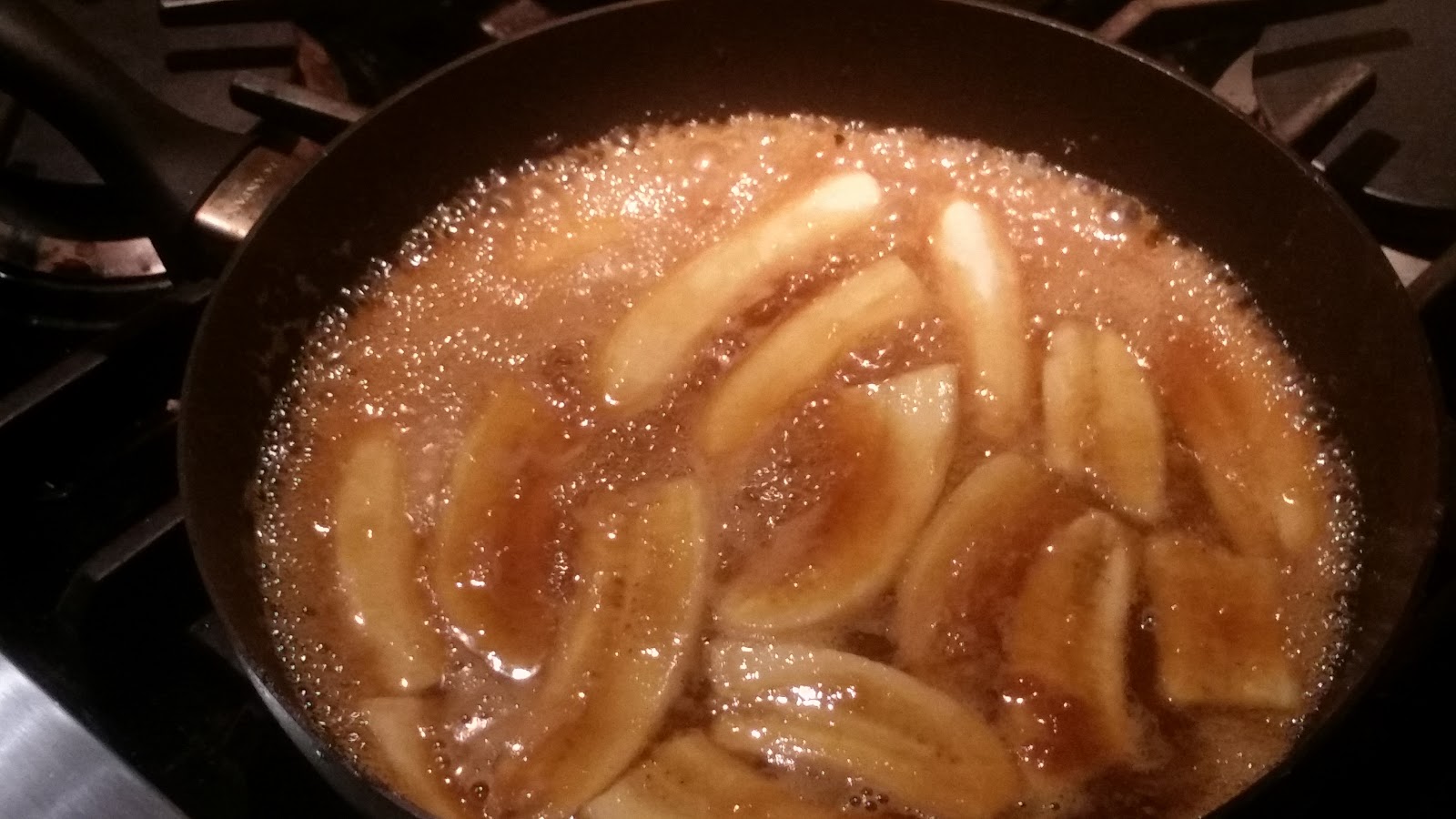
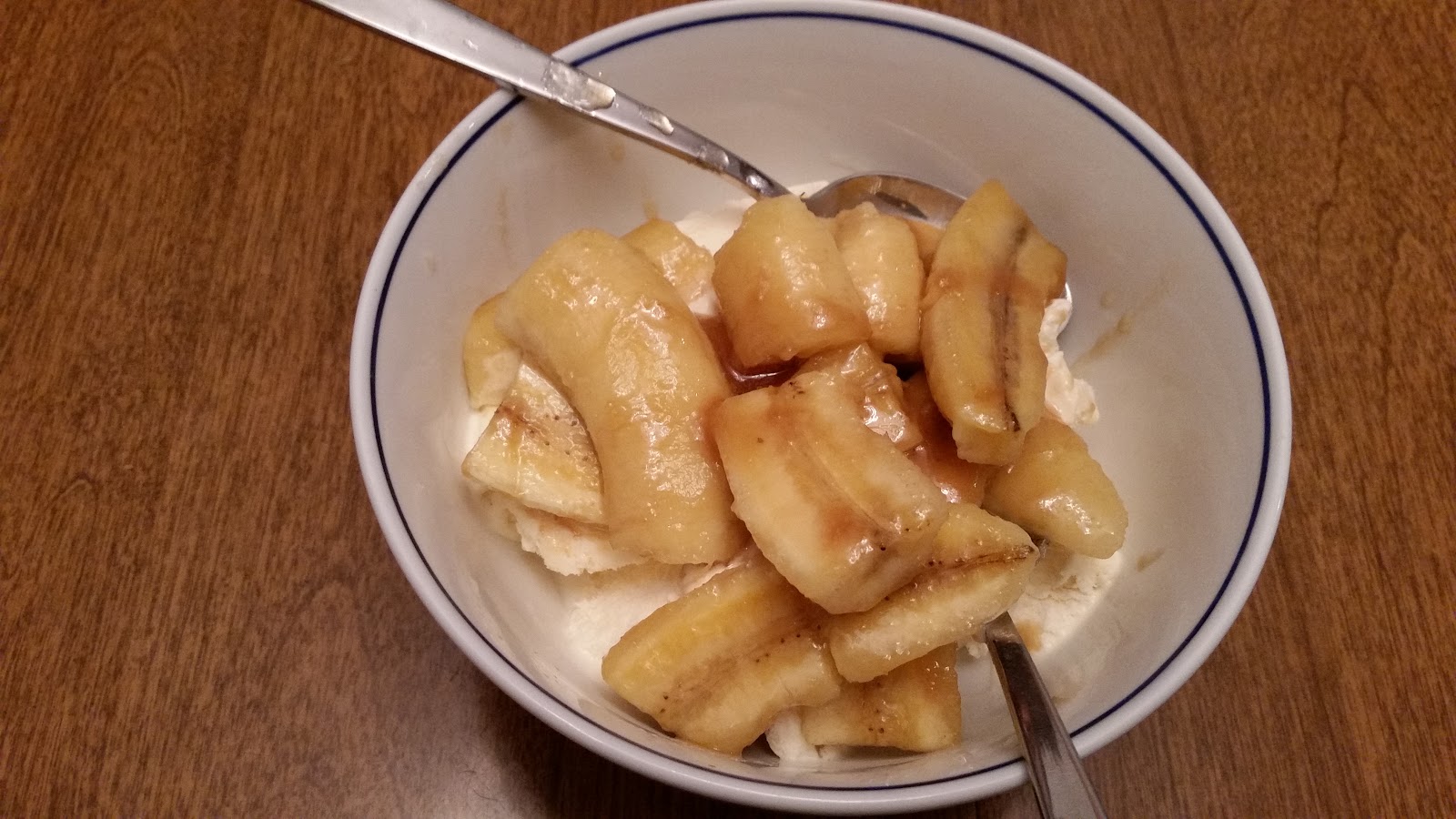
In December of 2017 (ugly Christmas sweater day to be precise) I got to do a great dish to connect with chemistry; Bananas Foster (thank you Flanigans!).  Bananas Foster originated in Louisiana.  It is made by mixing butter and brown sugar on low heat before adding bananas and dark rum.  The rum is then ignited after briefly being heated.  Interestingly the alcohol in the rum does not completely burn.2  I had yet to ever cook using the flambe technique and this is a very approachable dish.  It also has a lot of experimentation to try.  The first thing I noticed when eating is that there is a substantial amount of dark rum flavor left after burning.  So I am in the process of now experimenting with what different alcohols taste like.  Thus far I have tried making Bananas Foster with gin and it tasted good.  Not only did I think so but my expert neighbor from the South confirmed.  I will later try it with vodka and maybe a clear rum as well.  I did not notice any difference with the flame although I would love to see if a distinction could be made using higher level equipment.    
Later in the year our IB Chemistry HL 2 class did the internal assessment where every students constructs their own personal chemistry experiment, does the experiment and writes a formal report to be submitted to IB as part of their grade.  One student did an experiment where they compared heating vodka with lighting vodka on fire to see how much alcohol remained for each.  The results showed that heating was more effective than igniting the alcohol although more results would have improved the certainty of that result.  
Figure 1:  Brown sugar and butter are mixed under low heat


Figure 2:  Stir the butter and brown sugar thoroughly (ugly Christmas sweater optional)


Figure 3:  Add in the bananas before adding the liquor and ignition.


Figure 4:  The finished product that I made using gin in place the dark rum


#1 - Paneer

#2 - Bananas Foster
#3 - ???
Sources -
2. Hanson, Christine E.; Kwasniewski, Mishi T.; Sacks, Gavin L; Decoupling the effects of heating and flaming on chemical and sensory changes during flambe cooking International Journal of Gastronomy and Food Science V. 1 (2) June 2012 p.90-95 https://www.sciencedirect.com/science/article/pii/S1878450X13000024

Saturday, February 3, 2018

International Cooking With Chemistry 3 - IB Group IV Project

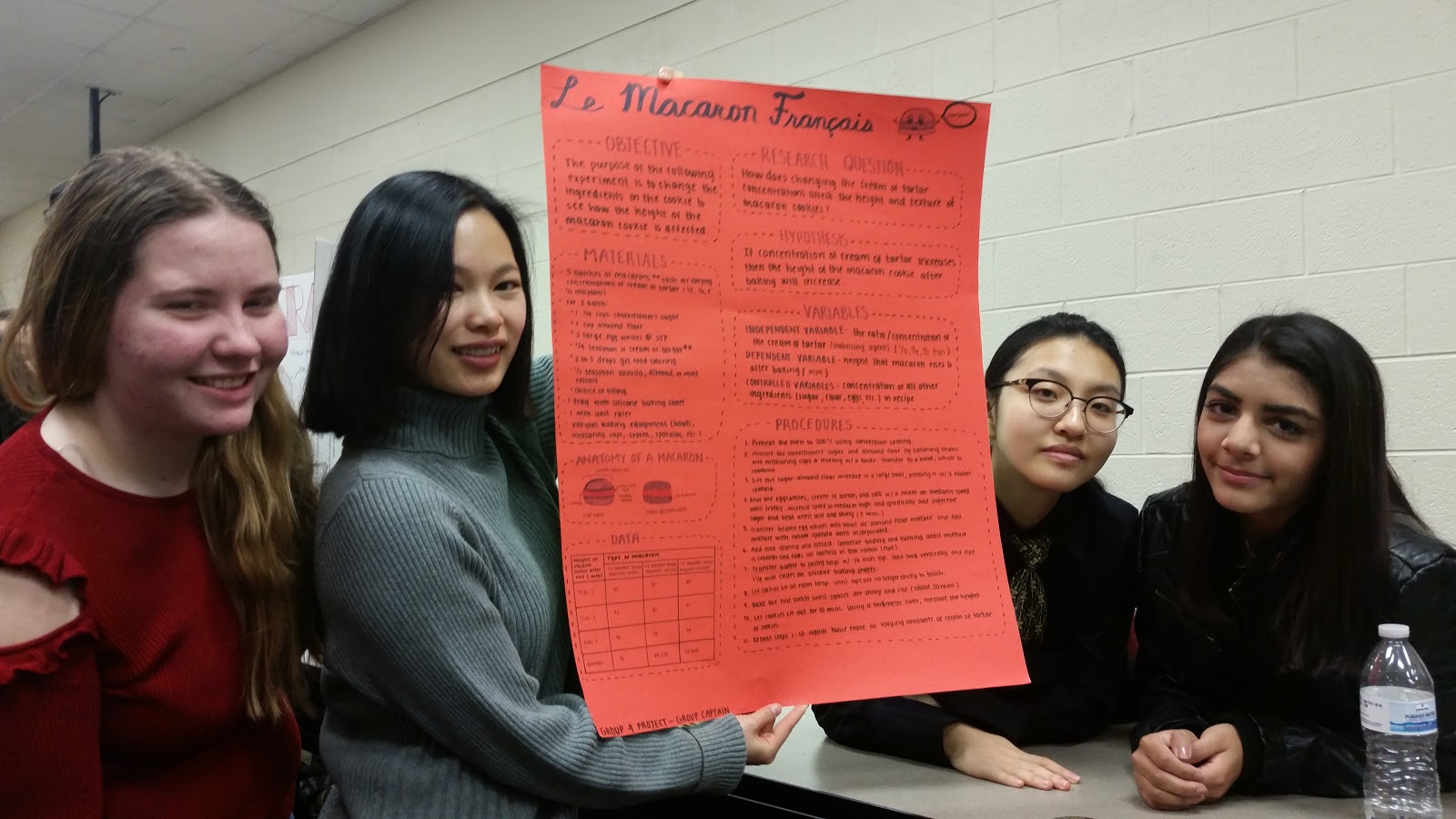
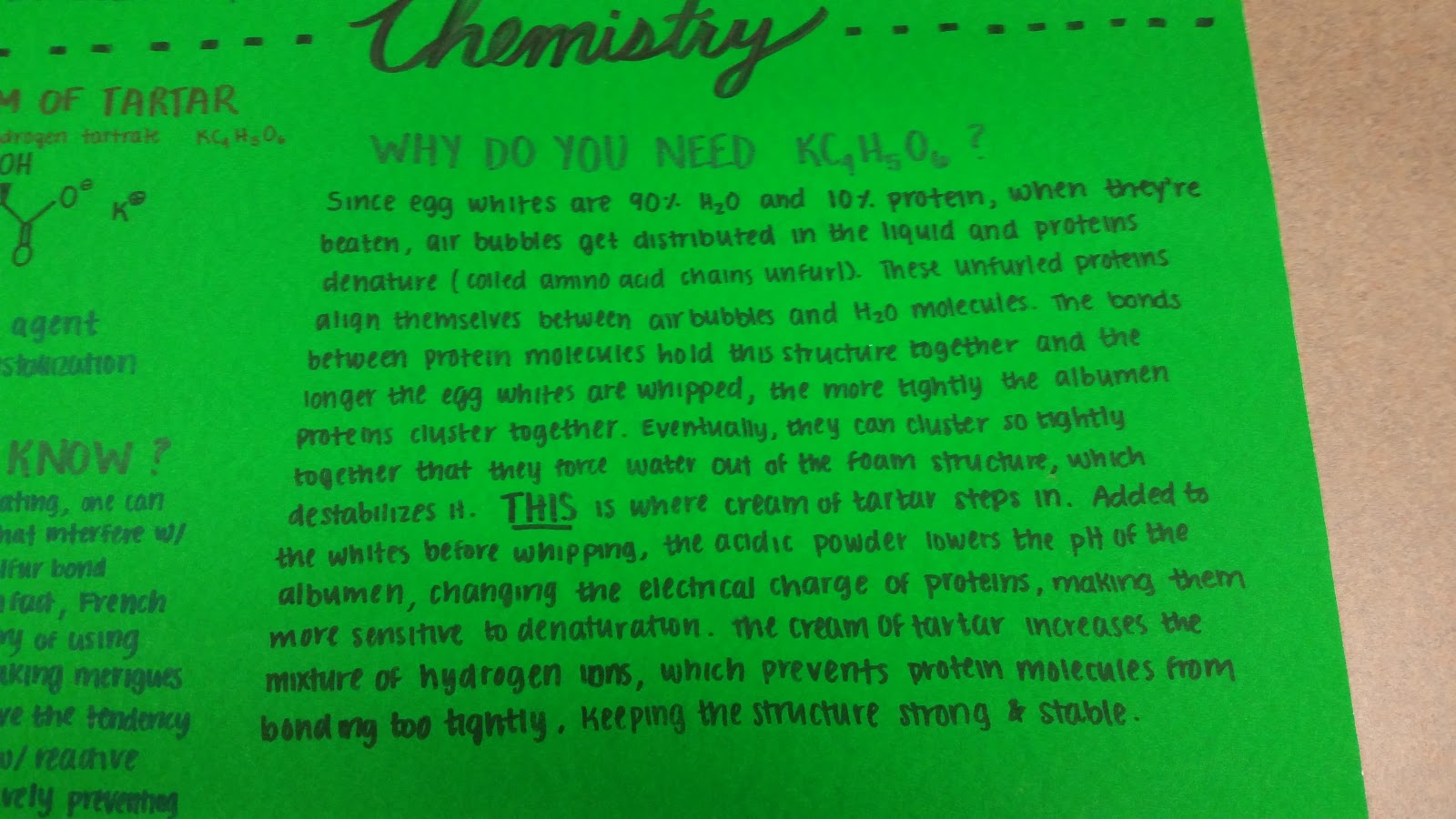
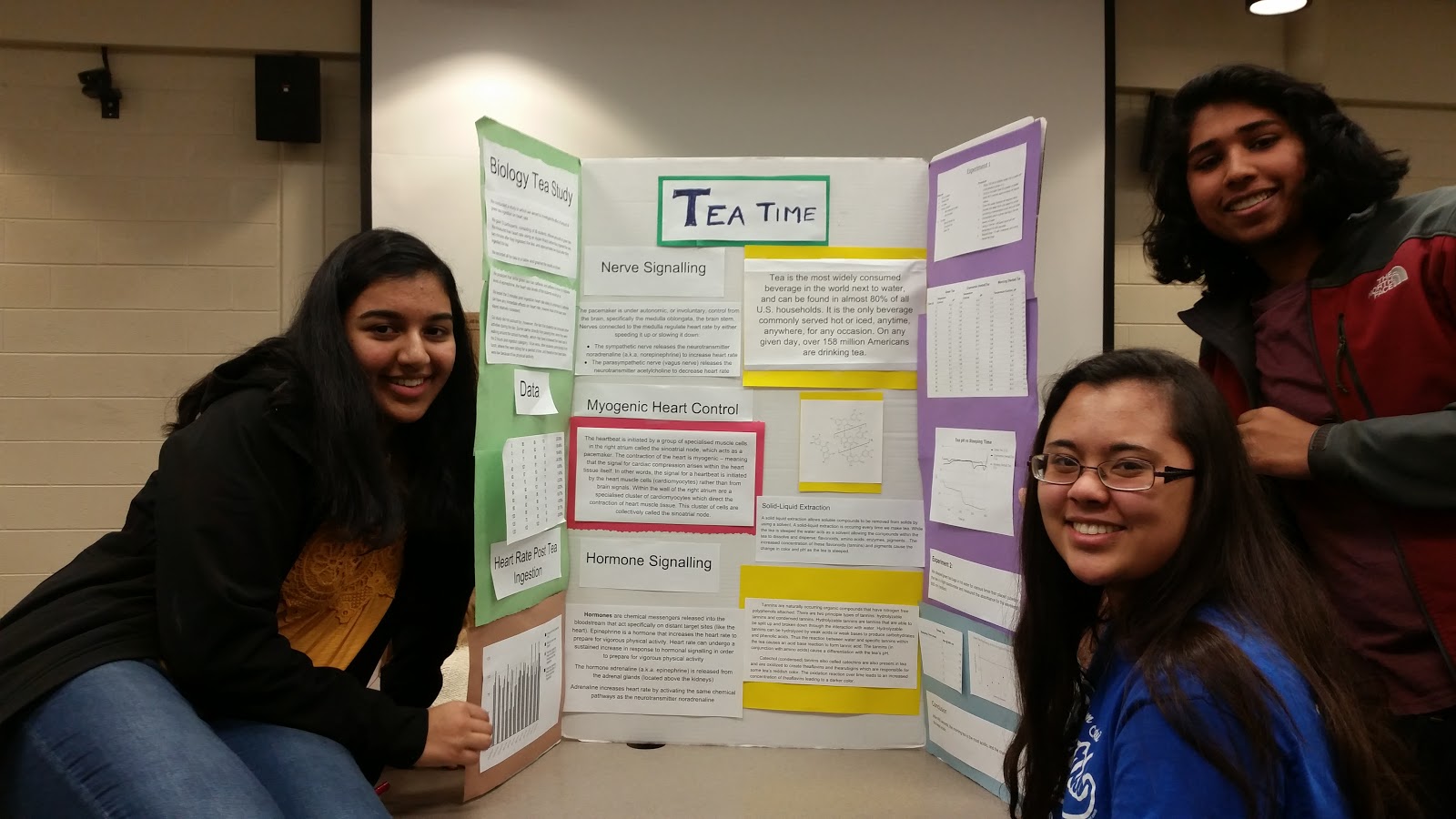
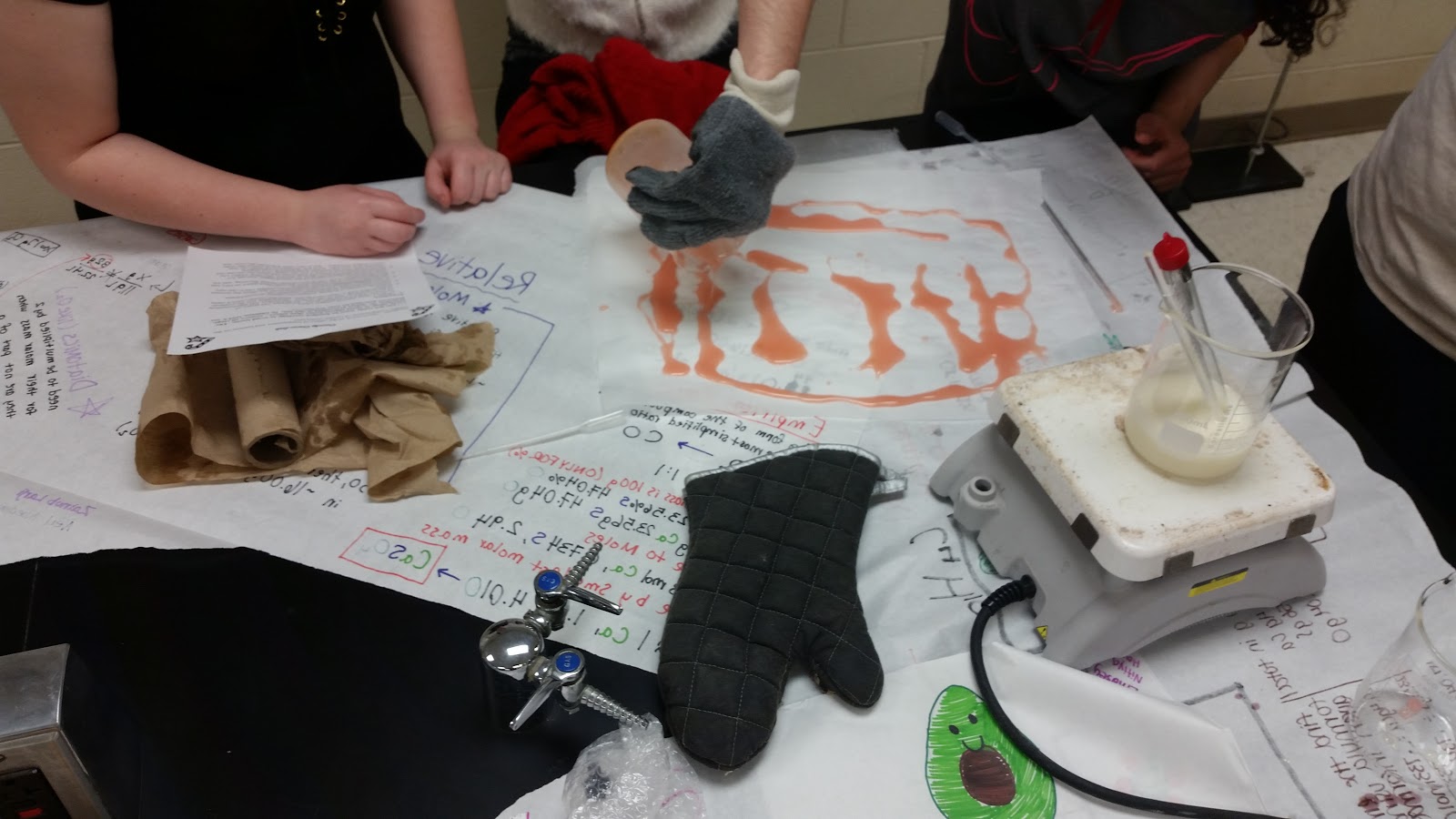
IB students were tasked with creating an experiment or set of experiments that analyzed international foods from different scientific perspectives (usually biology and chemistry).  Students used a variety of experimental methods utilizing creativity in their methods.  Pop Rocks (Spain) were dissolved in a hydroxide solution and then titrated to measure the amount of carbon dioxide present (Figure 14).  Another group tested the various components of Bakkalava to determine which had the biggest impact on the boiling point of the mixture (Figure 1).  One group tested how to make the perfect macaron (Figure 4, Figure 5).  They detailed the mechanism by which potassium bitartrate influences the protein structures and how this affects the texture and height.  Students used tea to investigate caffeine and tannin amounts, then connected these experiments with biology by examining heart rate after consumption (Figure 6).  
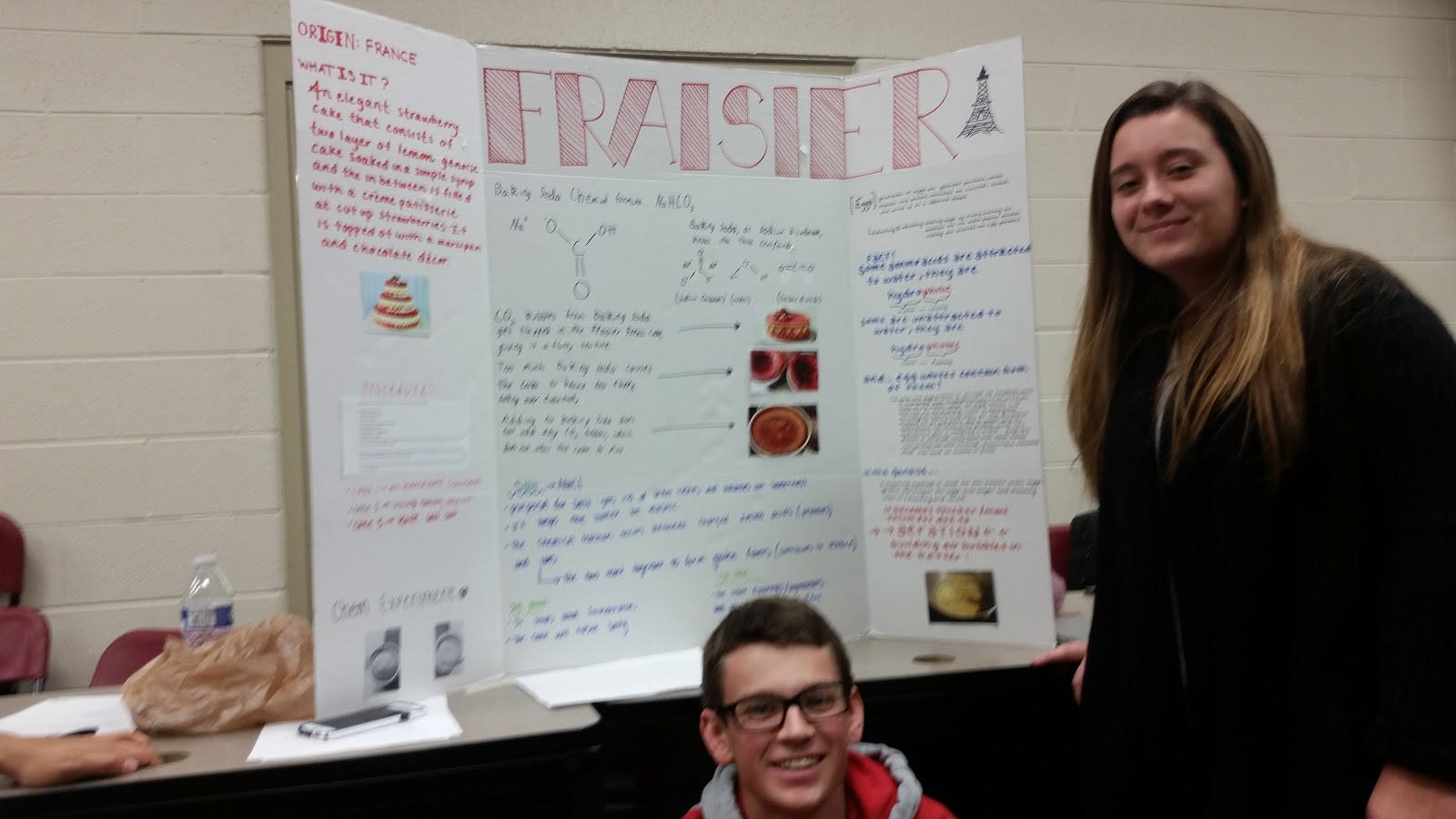
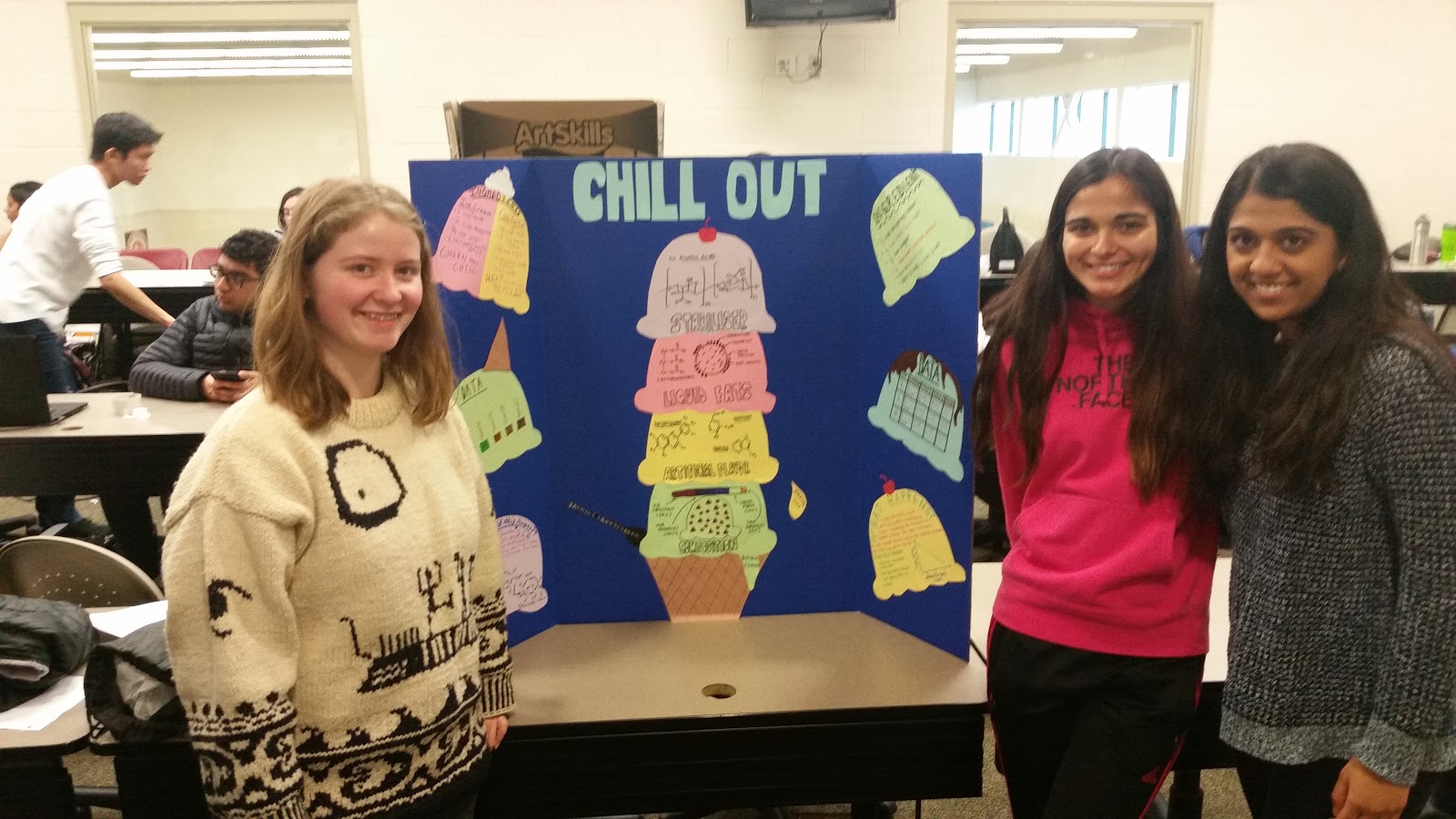
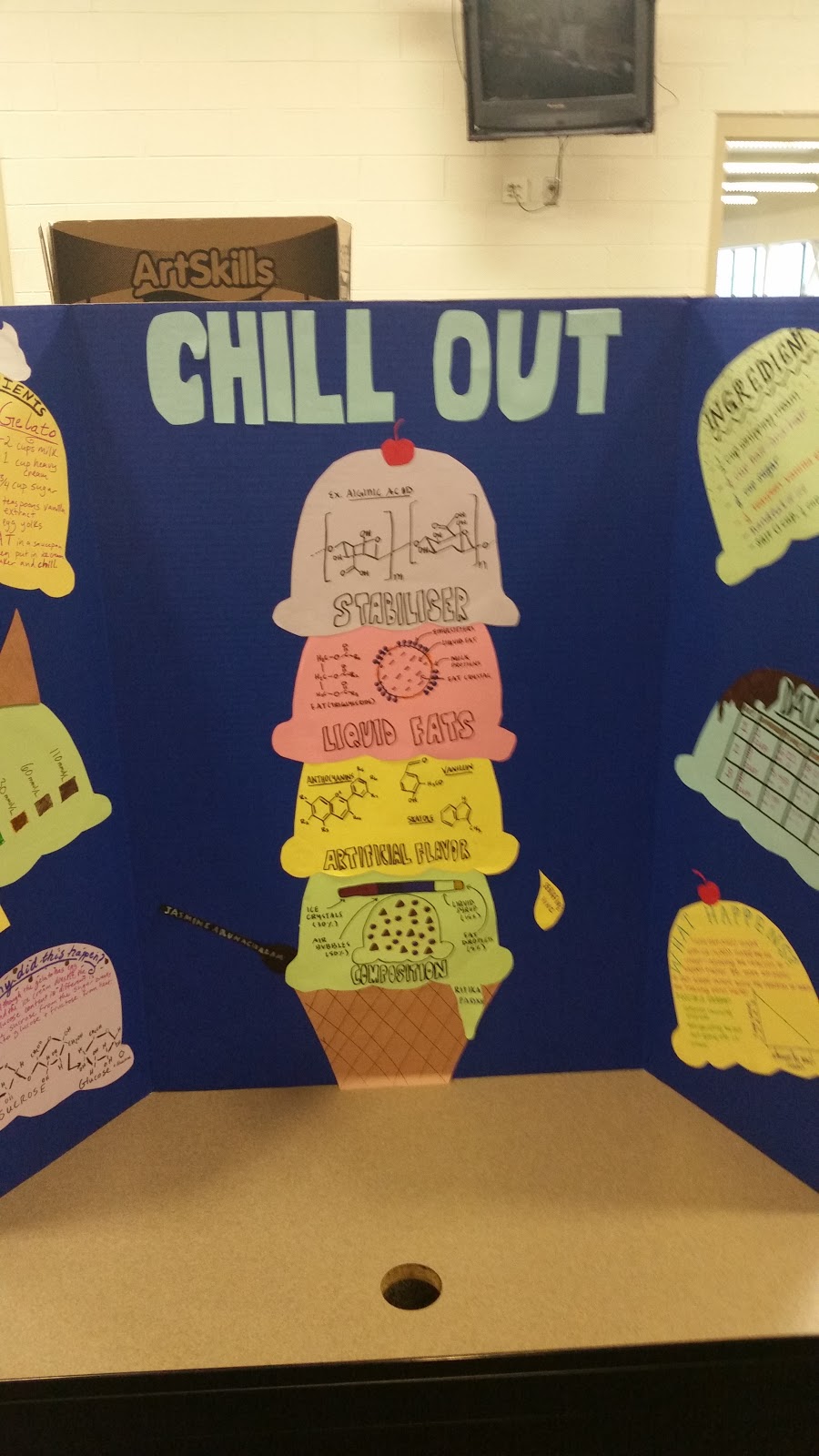
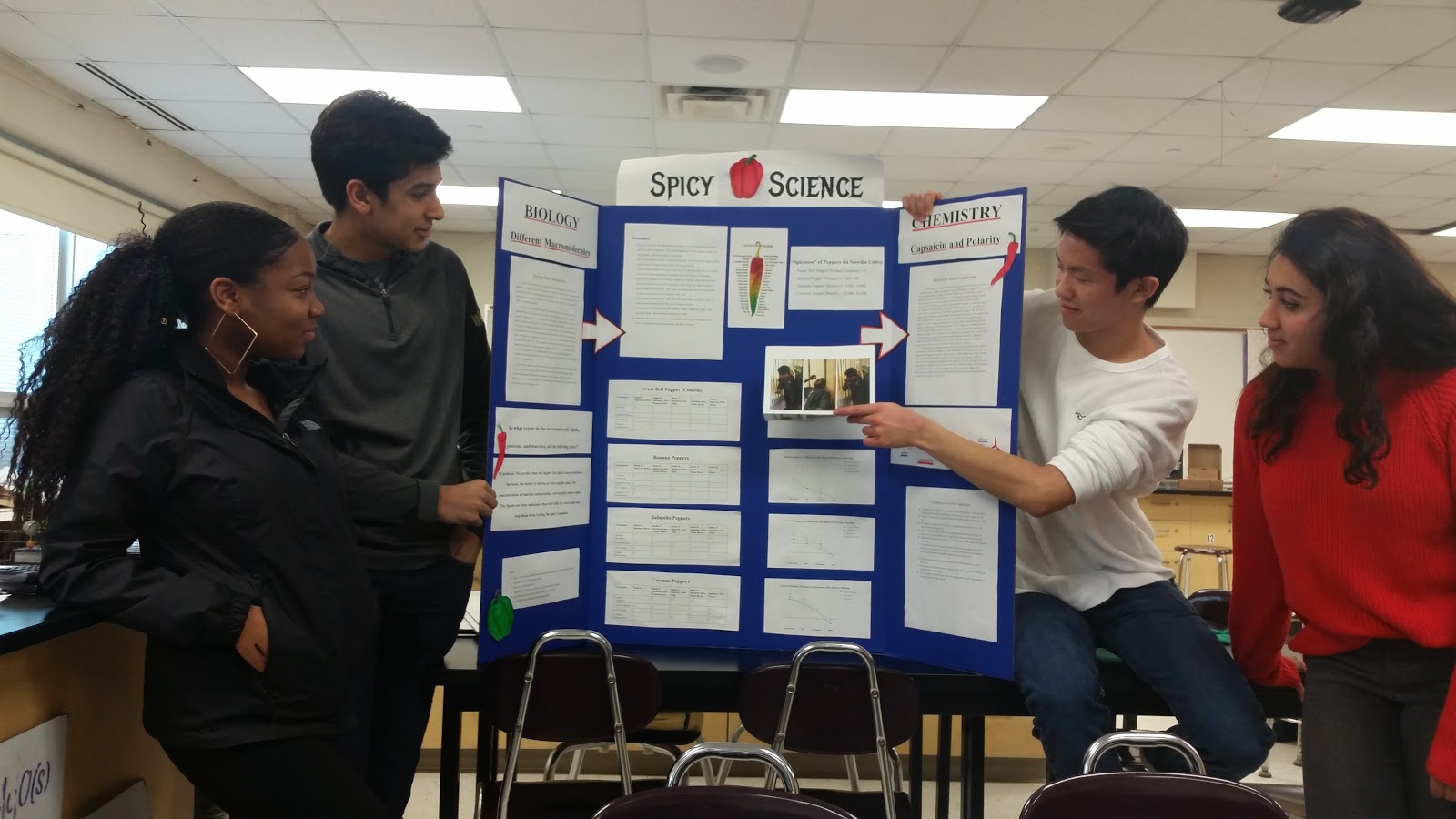
Students testing dough and yeast (Figure 7) found great data showing how yeast affected the rise of the dough (Figure 8).  Students gathered some brave volunteers to test which foods (Figure 13) reduced the affects of capsacain in spicy foods (peanut butter was typically the best). Students made Fraisier (French strawberry cake) with varying amounts of baking soda (Figure 9).  Students tested textures of various foods after a variety of experiments to simulate cooking (Figure 2, Figure 3, Figure 10).  And even though students researched ice cream and gelato (Figure 11, Figure 12) we still spent the next day making candy canes (Figures 15-17).  During our candy making one group even added in citric acid and ended up with sour gummy candy that was delicious.  


Figure 1:  Chemistry and Biology of Bakkalava
Figure 2:  Chemistry and Biology of kibbeh
Figure 3:  Chemistry and Biology of noodles
Figure 4: Chemistry and Biology of macarons
Figure 5:  Protein denaturing, air bubbles and cream of tartar for the perfect macaron
Figure 6:  Chemistry and Biology of Tea
Figure 7:  Chemistry and Biology of yeast and dough
Figure 8:  Great correlation between dough rising and increasing quantities of yeast
Figure 9:  Chemistry and Biology of Fraisier
Figure 10:  Chemistry and Biology of seviche
Figure 11:  Chemistry and Biology of Ice Cream
Figure 12:  Anthocyanins, skatole, alginate stabilizers and other relevants structures for ice cream
Figure 13:  Chemistry and Biology of spicy


Figure 14:  Chemistry and Biology of Pop Rocks
Figure 15:  A batch of candy cane mix now ready to shape and color
Figure 16:  Shaping the mixture into candy canes

Figure 17:  More candy canes being made


Sunday, January 21, 2018

Do people with lighter skin have different sunscreen needs?


We spent a class period researching in groups and a class period discussing our findings.  The prompt was to construct an argument that skin color matters for sunscreen use and an argument that skin color does not matter.  From there our groups diverged greatly as they built up arguments and pertinent explanations.  
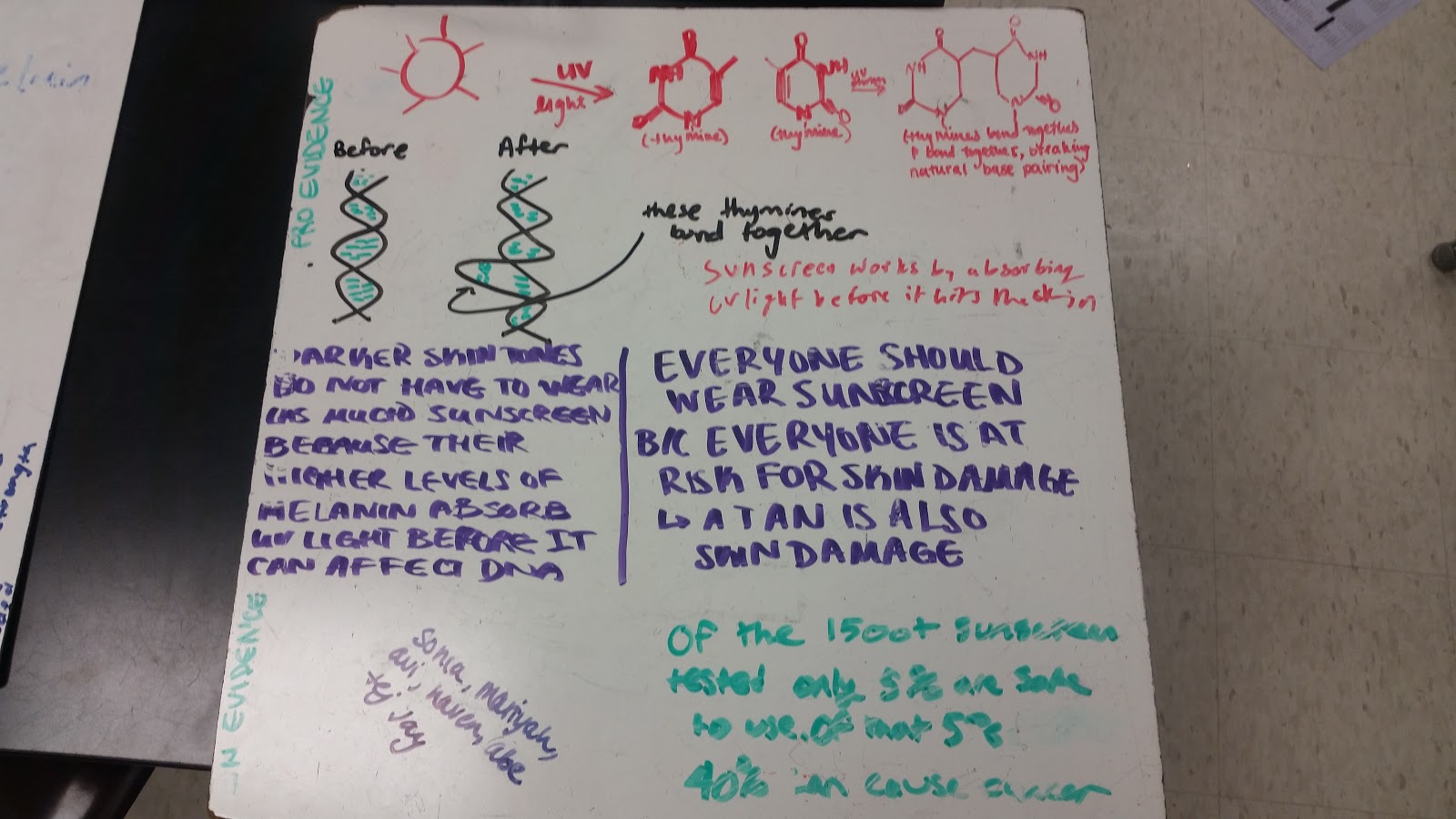
Figure 1:  Whiteboard 1 explores the mechanism by which UV light causes DNA mutations


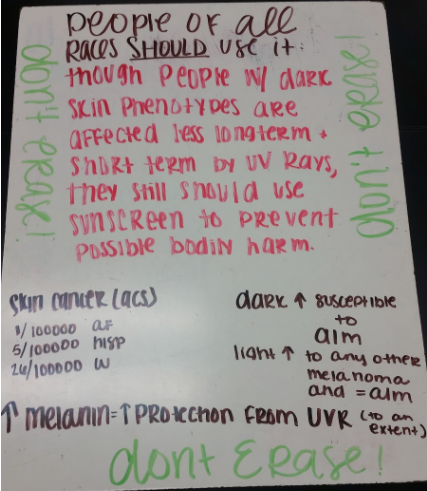
The wide variety of information in the various whiteboards led to some great discussion on content as well as generic science.  We discussed if knowing the mechanism of DNA damage by UV light is relevant so long as we see the data in Whiteboard 2 (below).  Students split but offered mostly arguments that mechanism knowledge is highly relevant to evaluate the conclusions from the data of skin cancer rates.  Multiple examples were offered such as some races might be located where they experience different exposure to sunlight, different races might also use different amounts of sunscreen on average and reporting of race can be inconsistent.  In general most students felt that just knowing skin cancer rates is insufficient and could be correlation without causation.  
We also talked about the mechanism by which UV light originates and under what conditions an electron can accelerate so much that it produces such high frequency light.  We connected the emission and absorption of light with the Balmer series for hydrogen.  We reviewed the spacing of energy levels and I instructed about the differences in energy level spacings for gaseous atoms/ions compared to molecular excitations.  We connected this later with Whiteboard 6 by talking about how a slight adjustment to a molecule can cause a minor change in the frequencies of light absorbed and how pigments and dye research often utilizes electron rich and electron deficient functional groups to shift color.   
Figure 2:  Whiteboard 2 found cancer rates based on race

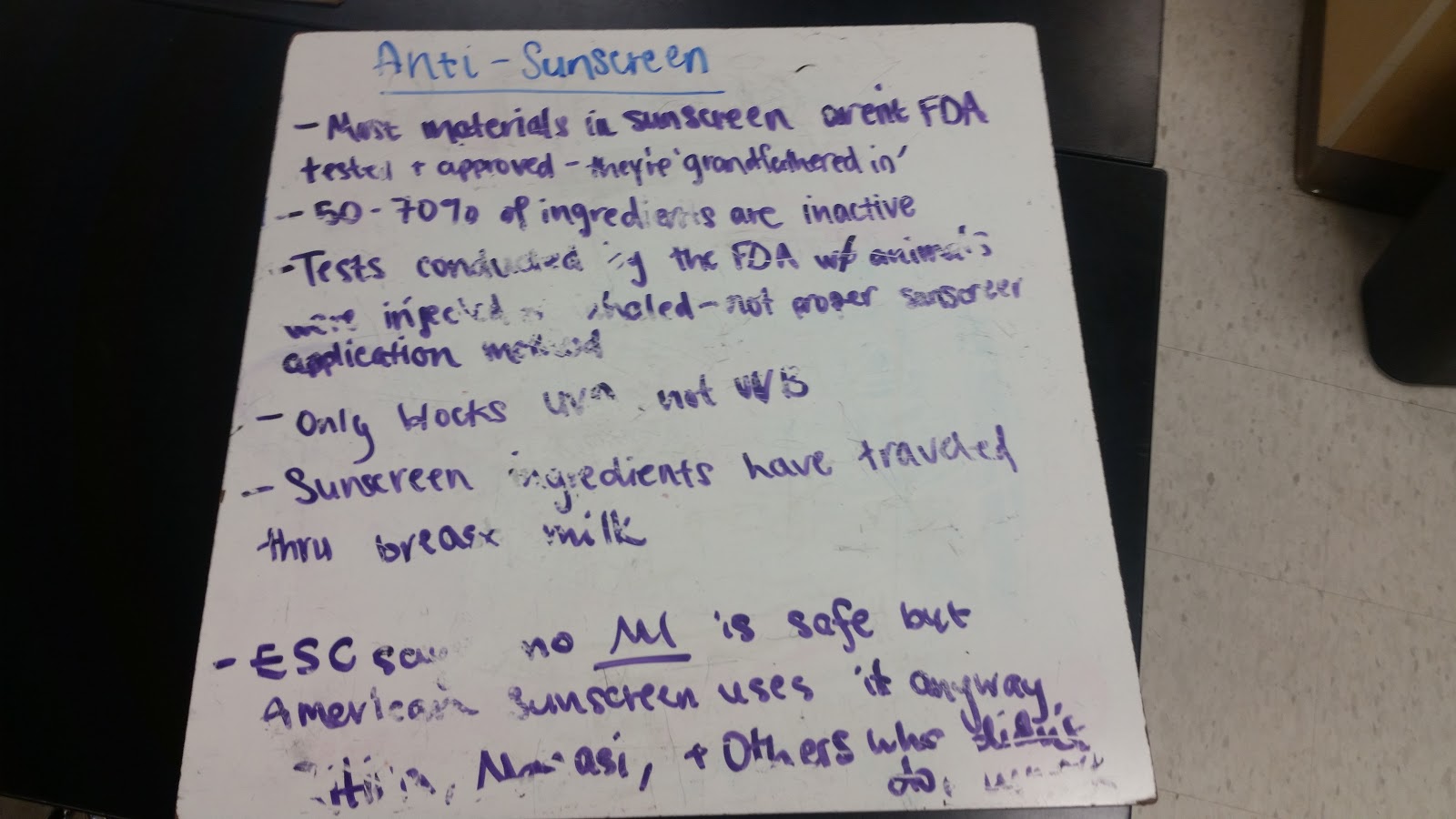
Figure 3:  Whiteboard 3 went full “Natural News” to locate some arguments against
sunscreen


This board led to a good discussion on sources of scientific information, how sources manipulate data and experiment into “clickbait” articles.  We posed the question “Are any of these things actually bad or do they just sound bad?”  For example, if sunscreen ingredients are present in breastmilk, is that bad or is it so infrequent and low in concentration that it is irrelevant?  We talked about how the FDA does not have jurisdiction over supplements and how labels for supplements are sometimes shown to be incorrect.  We also compared this board to the risks of not wearing sunscreen using Whiteboard 2 (above).  
Figure 4:  Whiteboard 4 summarized different wavelengths of UV light and nanoparticles
used for sunscreens

Figure 5:  Whiteboard 5 looks at melanin and interactions of sunscreens with UV light

Figure 6:  Whiteboard 6 looks at different chemical structures utilized in sunscreens


Conclusions that students made included that the SPF data they saw suggested that anything over SPF 50 was a marketing scam and was less healthy than using SPF 50 or lower.  We concluded that the mechanisms by which electrons change motion during electronic transitions in molecules are incredibly difficult to visualize and that this uncertainty can be problematic for understanding.  We concluded that everyone exposed to sun should wear sunscreen because melanin mostly protects from sunburn but not from DNA damage.  We saw a variety of organic molecules used to absorb UV light as well as alternatives such as ZnO nanoparticles.  We started our discussion by looking at how 11 cis-retinal converts into 11 trans-retinal when absorbing visible light and this is the mechanism by which our brain becomes aware of light hitting our retinas.  We talked about the breaking of the pi bond before the rotation occurs and later compared this to potential changes in molecular structure when UV light is absorbed by molecules in sunscreen.  
As a teaching lesson I was highly pleased with the variety of topics to discuss and the variety of information students used to make arguments.  Students looked at chemical structures, DNA damage mechanisms, skin cancer data, sunburn data and how UV light itself varies.  We identified what type of light escapes the sun as a subject that requires more research.  We will continue to use this topic throughout our review.  We saw connections to organic chemistry, quantum chemistry, periodic trends and bonding.  It was interesting to the majority of students.  Some students asked what it was like to be sunburned because they had never experienced it before and most students had limited ideas coming into the discussion but left with much better knowledge.  

Sunday, January 14, 2018

The Staff Meeting I Dread - Student Course Selections


A few years ago I had a student take the advanced chemistry class I was teaching.  They did not do well on the first few exams we took and eventually I checked over how they had done in chemistry.  Lo and behold their grade was quite low.  Now when I recruit for IB chemistry or AP chemistry I make it a point to tell the students first that if they did not do well in chemistry that they should take AP chemistry or IB chemistry.  Why go to college and struggle through the material alone when you can work through it with a high school teacher that is likely to be far superior at teaching and where you will move much slower through the material with a lot more assistance?  When I lead with this I often hear a few students laugh as I start the comment before quickly realizing the validity of my perspective.   
So you would think that the first thing that I would have done would have been to talk to the student about their struggles and their ambitions and goals of taking the class.  But this year I had an overwhelming amount of struggle going on from my students and myself teaching new classes.  So instead I deflected and would just get frustrated every time I had to grade another round of tests that had a demoralizing amount of wrong answers.  Then at the end of the year I was talking to the student about college plans.

Me “What are you doing next year for school?”
Students “I’m not sure”
Me “Do you want some advice”
Student “Yeah, well the thing is, I just really love chemistry so much.  It’s my favorite subject, but I’m so bad at it.  I want to major in it, but I don’t know what to do.”

Had my frustrations with their lack of success influenced how I taught this student?  If I had had a better perspective would that student not have those doubts?  I could have taught them better than I did but now they got to carry all of the weight of my decisions.  I was really disappointed in myself because even though I tell students that struggling students should take these classes I had never considered that a student could struggle and love the course.  What had happened to my idealism?  I love chemistry and I don’t love it because of how well I can do problems in it.  I love taking the best results and conclusions from the smartest people throughout history.  I love connecting the macroscopic level with models in the microscopic level so that students can understand what is happening.  Teaching and learning chemistry is my passion and I had missed a chance to share that with someone seeking just that.  
Every year there will be a staff meeting for our department where we talk about scheduling.  I dread this meeting.  Teachers somehow are systemically driven to develop philosophies that only student X belongs in a class and students that do not accomplish Y prior to the class are failures unworthy of learning that content.  There is an angry tone in this conversation and in my view it is because the conversation is unhealthy.  This meeting makes me feel like I've been trapped in the Stanford Prison Experiment and am stuck being a guard. We go to great lengths to prevent students from taking a variety of classes from AP courses to honors courses to regular chemistry.  I wish this were an isolated thing, but I am quite confident that it is systemic because I see it frequently on social media, at conferences and from many teachers beyond my own district.  But I believe very strongly that this mentality of exclusion is damaging and worthy of resistance.  Students in our district are exposed to it every time they sign up for classes starting in 6th grade.  There is an unrelenting pressure put on them that they are not good enough to be where they are and the mental health toll is a disaster.  Think of a student that has been told every year that if they are not at a level of success that they should not be learning about chemistry, or biology or trigonometry.  Now envision what happens if that student struggles in a unit.  Even if they had been successful in everything they had done to that point, any struggle signals to the student that they do not belong in that class.  The conversations we have about course selection likely make children unhealthy in how they learn and I believe also promote segregation based on race and gender.  
We need to stop leading students to evaluate what they should do based on their grades and external mechanisms.  Many would argue that grades are essential to this discussion, but we are talking about 11 year olds.  We are talking about 14 year olds.  How a 14 year old does should have no bearing on whether they can learn chemistry as a 15 year old.  And often the evaluations we do don’t even make sense.  Math skills are not essential to high school chemistry.  High school chemistry uses multiplication and adding.  Students that struggle with manipulations in chemistry class struggle because they do not understand the chemistry involved in the manipulations.  Biology success should have no bearing on how a student does in chemistry.  There are millions of people that were more successful than I was in biology both in high school and in college but only a handful of times have I felt out of place in chemistry or physics.  These perspectives are common and counter productive.  Teachers of struggling students resort to them because of being overwhelmed by the difficulty of teaching.  If a student is struggling with something we should be able to give them specific feedback, have the student improve and continue that cycle throughout the year.  Instead we give students overly simplistic directives to avoid having the conversations we aren’t prepared for.  Work harder, study more, read the text more, etc.  
Students, teachers, parents, counselors and administrators all contribute to the reduction of course selection.  And perhaps all of us suffer the consequences of this as well.  Counselors and administration often use course selection as a means to avoid dealing with problems in classes.  If a class is taught using extreme methods that are exclusive, we help that teacher exclude students rather than address the teaching methods.  This can cause parents to seek exclusivity as a sign of elite status rather than focusing on student achievement.  This can allow negative teacher perceptions to fester.  So let’s break this habit.  If you’re a student don’t allow yourself and your fellow students to be marginalized by course selection presentations.  Ask your teachers thoughtful questions and seek out their passion.  Do the same with counselors.  We all love what we do and chose our profession out of passion.  Help us find our spark again.  Guide us into talking about the best parts of classes rather than the worst so you can walk into a class confident you will learn valuable things rather than being nervous about grading policies.  At some point in your life, no one will care what grades you got at all.  For many of us, that is when we are 17 years old.  So let’s spend less effort maximizing our GPA for little to no benefit and more effort learning about the best accomplishments of humanity.  
Sunday, December 3, 2017

International Chemistry In Your Kitchen #1 - Paneer

After reading Chemistry in Your Kitchen by Matthew Hartings this summer I decided to see if my International Baccalaureate students would be willing to have my learn how to cook a dish with their families.  Periodically my students will have a potluck during their core days where they miss their classes all day working on external assignments and there tends to be a wide variety of international cooking on display.  
In October I met with my first family (thank you Sharmas!) to learn how to cook Paneer.  I have grown up as a very picky eater and when you are a child that is a picky eater it becomes the mission of a select few to get you to try their casserole.  So I was very excited about paneer since it seemed like the perfect dish that was both new but not overwhelming to me.  
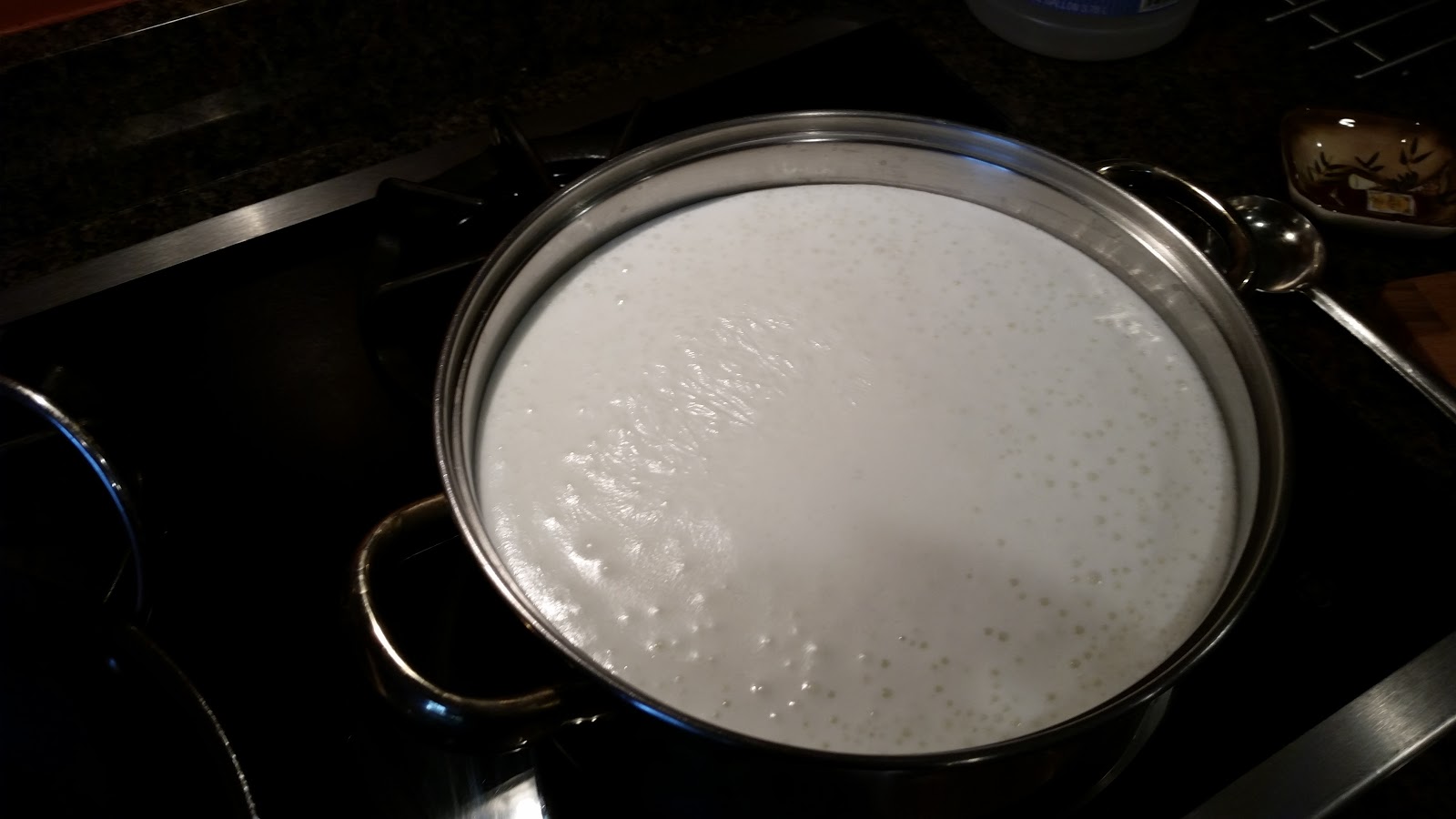
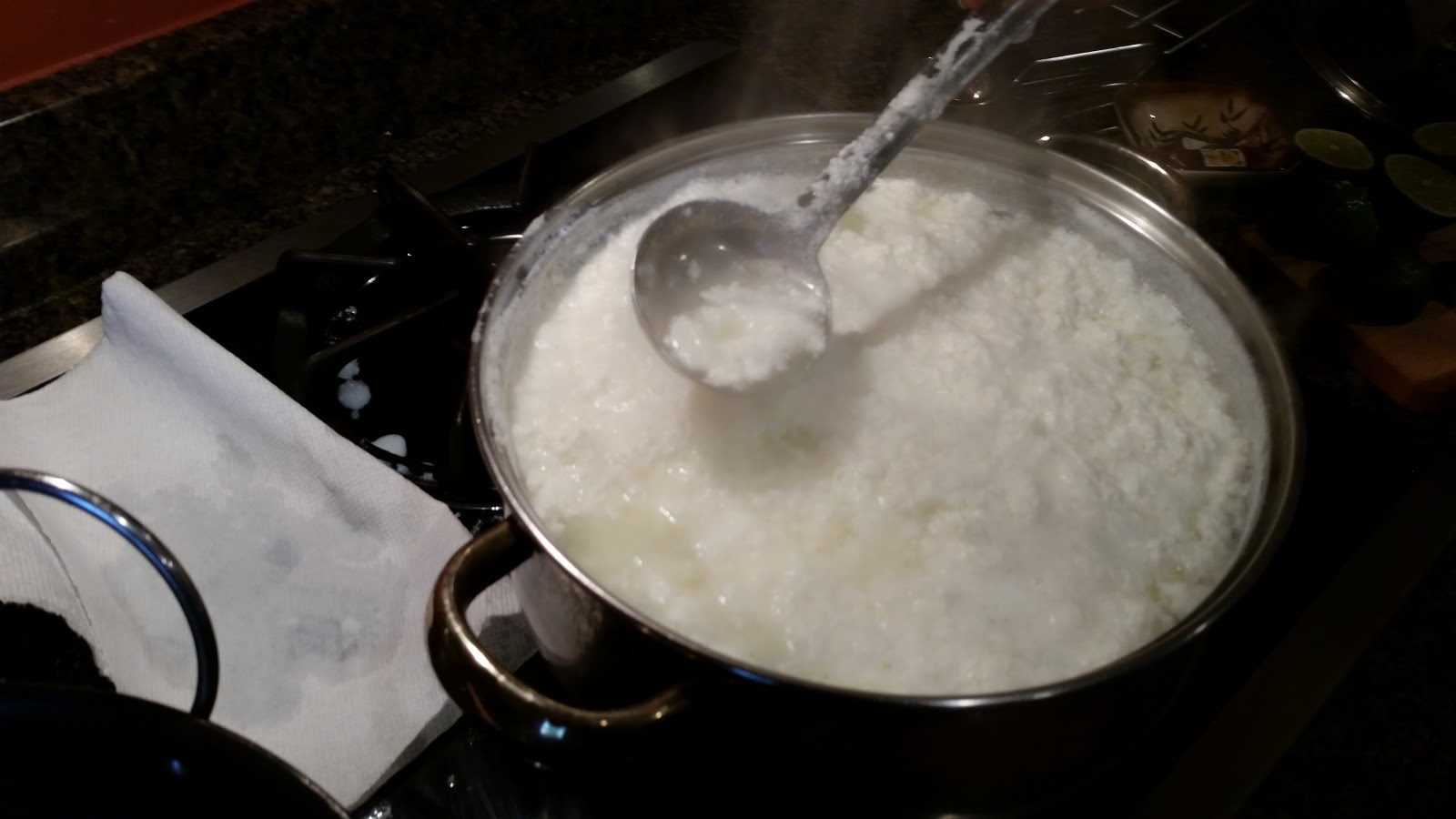
We boiled a very large quantity of milk and added some lime and vinegar to curdle the milk when it was just reaching boiling temperature.  
Figure 1:  Milk just before boiling

Figure 2:  The milk curdling after the addition of lime juice and vinegar

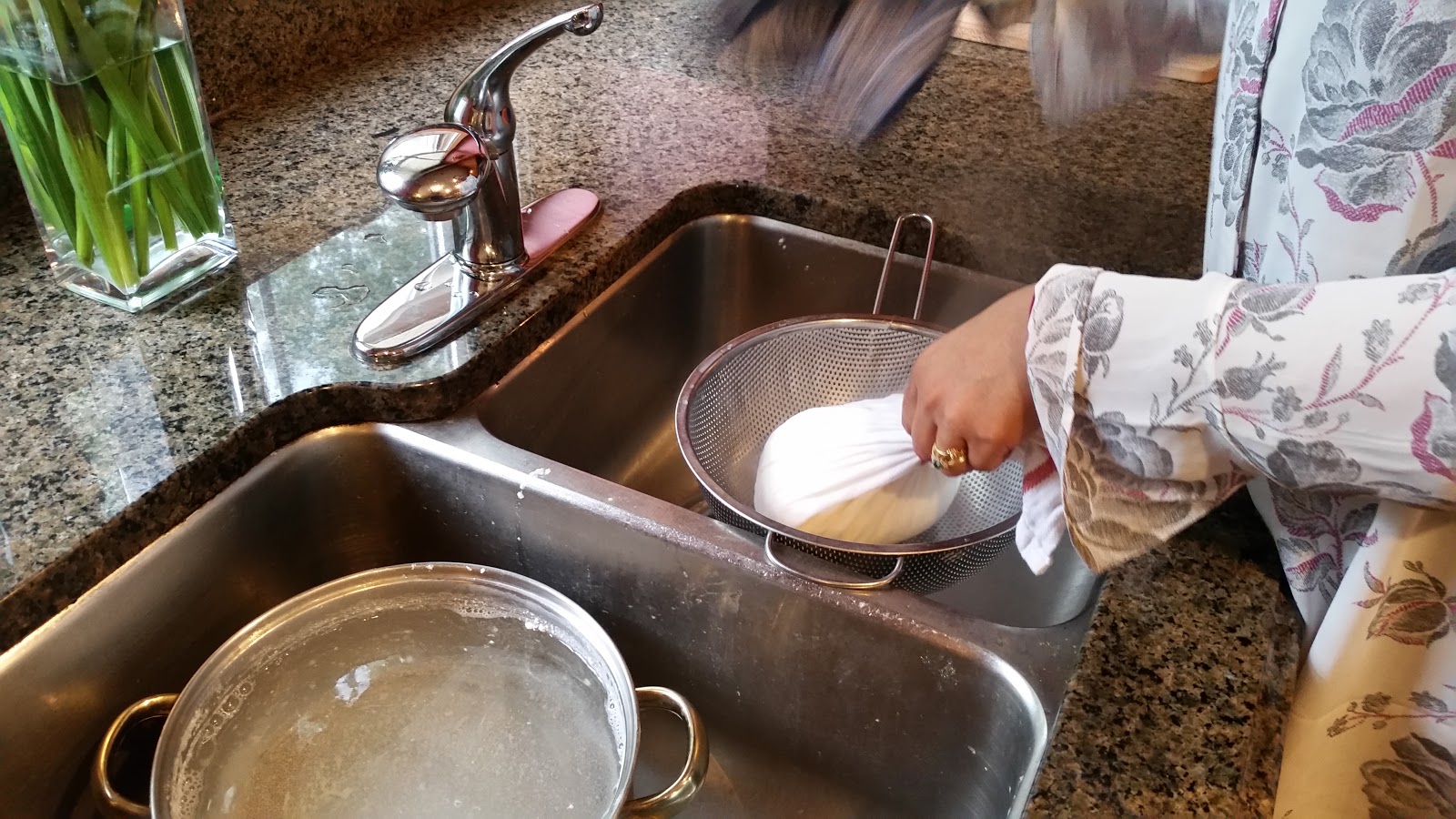
The acid bonds to phosphate groups on the casein proteins.  The casein has a hydrophilic and hydrophobic end.  The hydrophobic ends attract the same portion of other casein proteins and the hydrophilic ends attract to water because of the negative charge of the phosphate groups.  The acid reduces the attraction to water and causes the casein to clump as seen in Figure 2.  The mixture is then put into a towel allowing the excess liquid to drain.  The protein along with some trapped fats then link forming a block of paneer.  
Figure 3:  The paneer mixture is now forming while the excess liquid drains

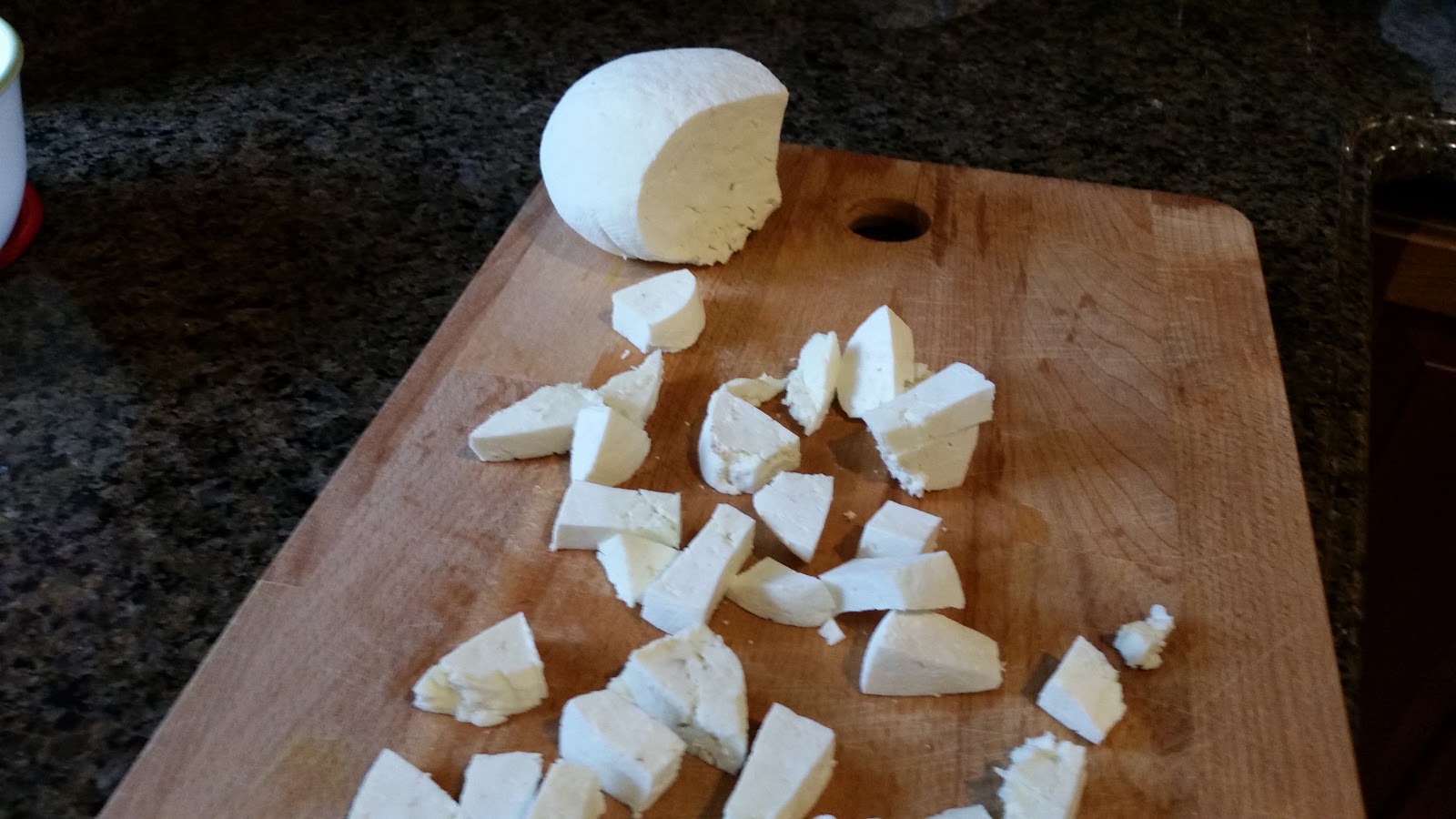
Figure 4:  The paneer takes shape and can be cut into pieces

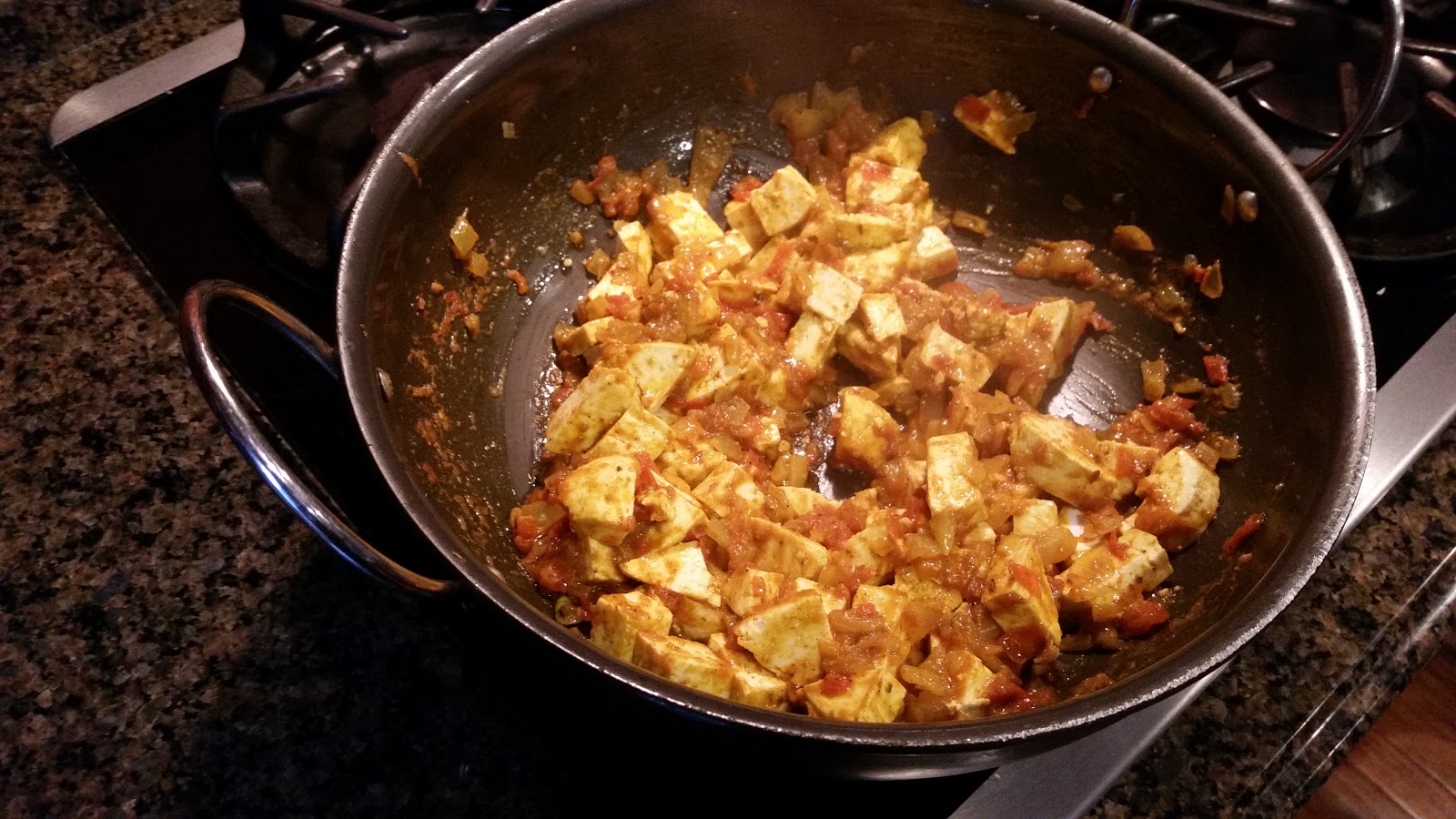
At this point we made a curry sauce using a variety of spices, tomatoes and onions.  The paneer was added to the curry sauce.  

Figure 5:  Paneer cooked in curry sauce

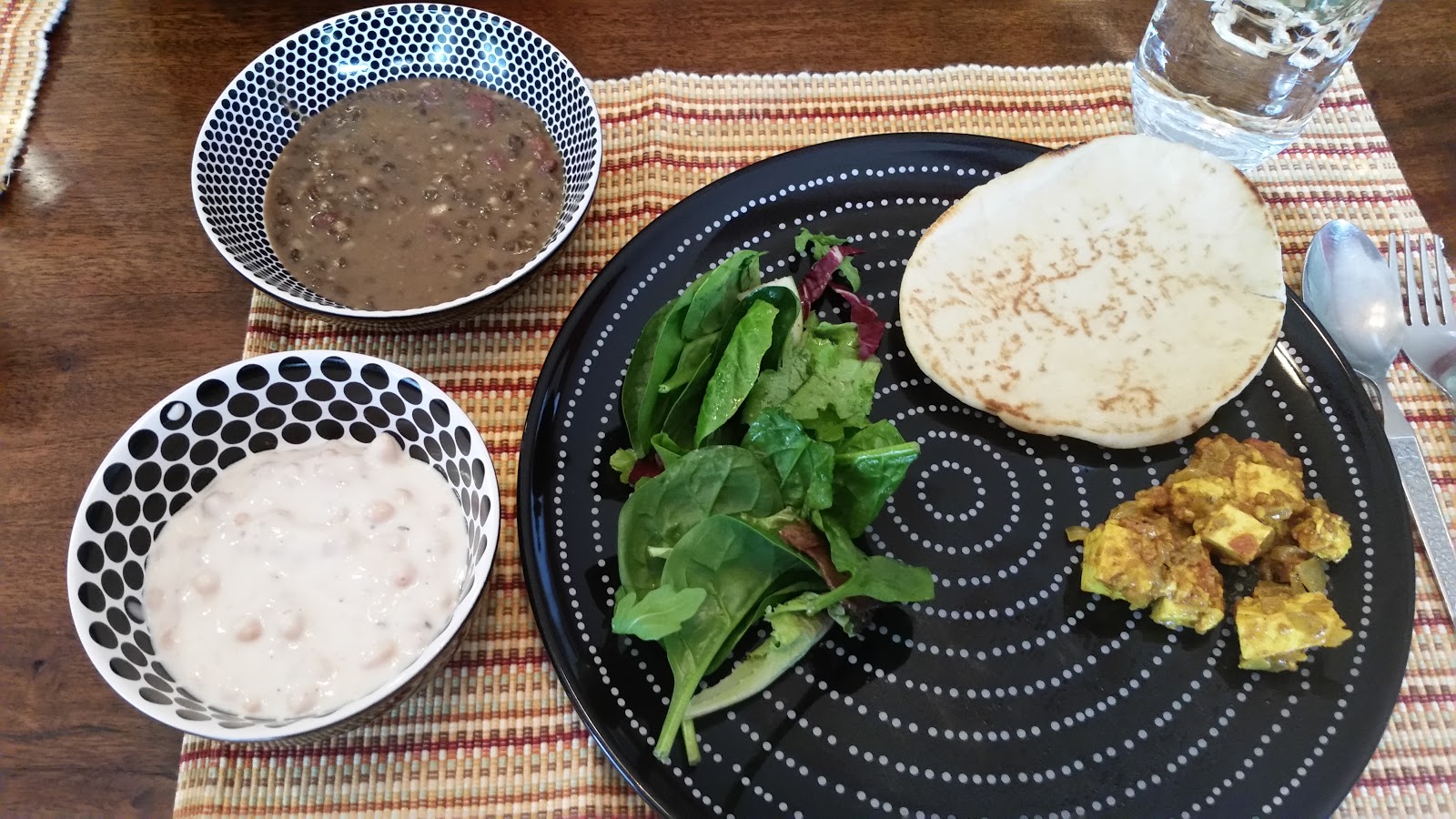
Figure 6:  The complete meal with paneer, lentil soup, yogurt, salad and naan.  

I had disorganized intentions behind doing this.  I had personal desires to learn how to cook more foods, and connect better with students and families in our IB program.  I had professional desires to connect chemistry and cooking and also chemistry with international mindedness.  The experience surpassed my expectations.  I learned about my students, got to eat an authentic Indian meal and it was completely vegetarian.  I learned you can purchase paneer at Costco and I also learned where to buy spices and groceries for preparing Indian food.  The concepts in this dish applied perfectly to the unit we learned next in class about acids and bases and we cooked paneer in class to reinforce the concept of acids as well as allow more students to experience an international dish.  We used citric acid rather than vinegar and it worked fine with no negative impact on the taste of the paneer.  Future possible experiments could focus on how the pressure applied to the cheese as it forms influences the final product or how concentration of acid affects the final product.  I believe the proteins clumping causes various components of the mixture including fats to get trapped and both of these experiments should influence what and how much gets trapped.  It would also be interesting to move a step further and add rennet and start developing cheeses.  


Figure 7:  My students Manasi and Ritika along with Manasi's sister Tanvi after our meal